
Opening Scene
It’s the South Side of Chicago, around 5:30 p.m., and the temperature has dropped to five degrees. The cold felt sharp and snow was up to my ankles. Raven greets me at the door, and behind her I catch flashes of movement, her boyfriend and fellow ChiArts alum, Cedric, moving quickly up and down the stairs.
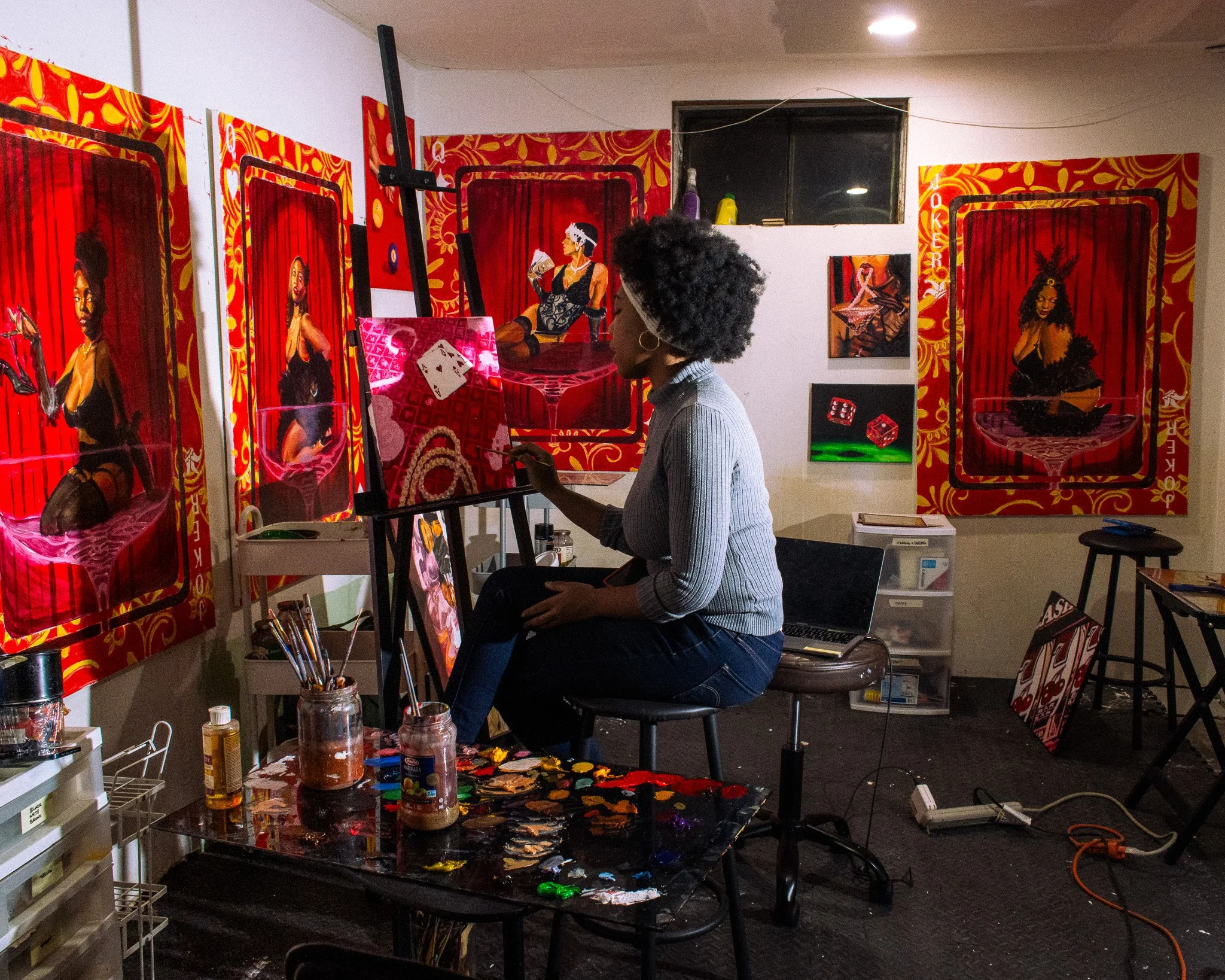
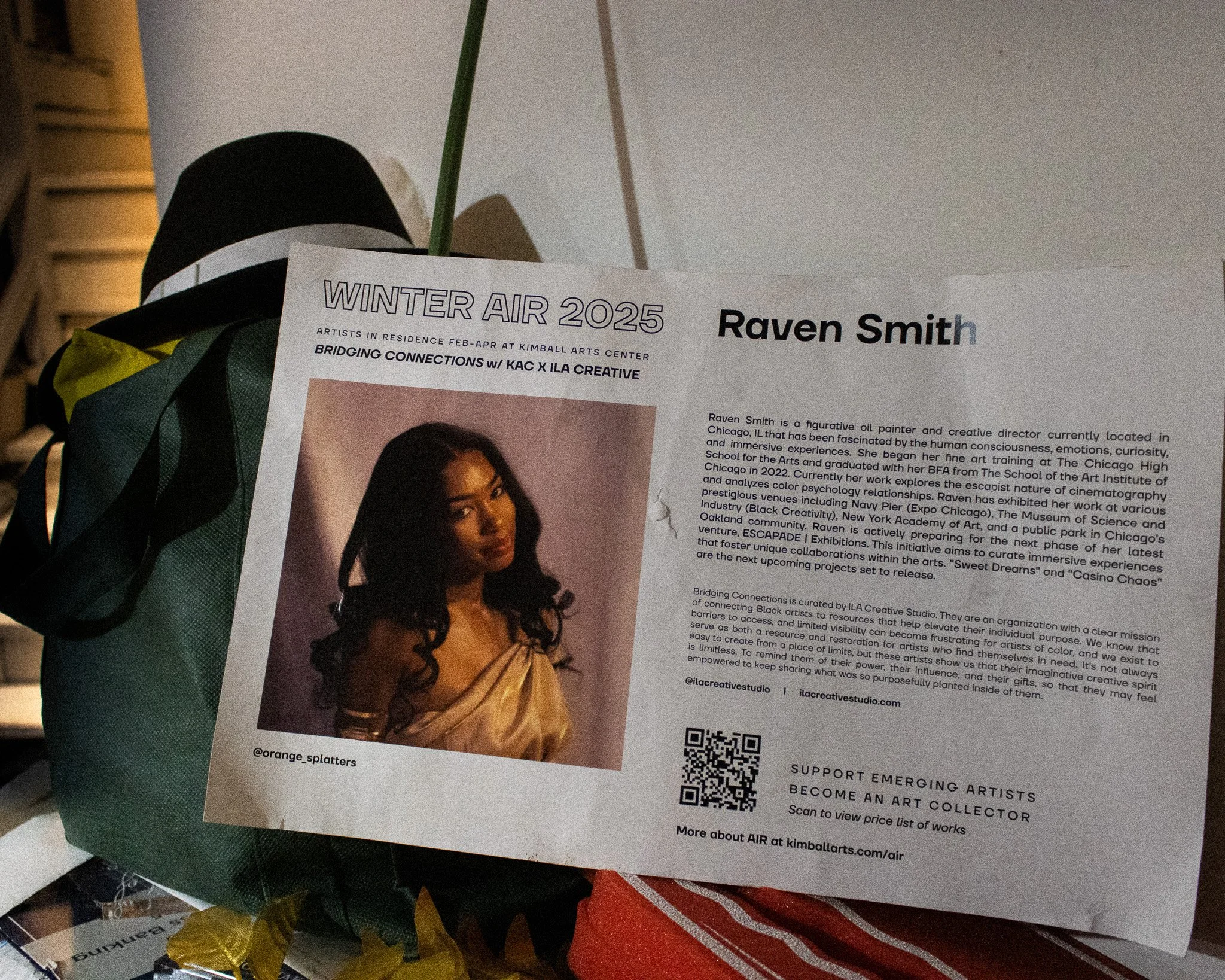
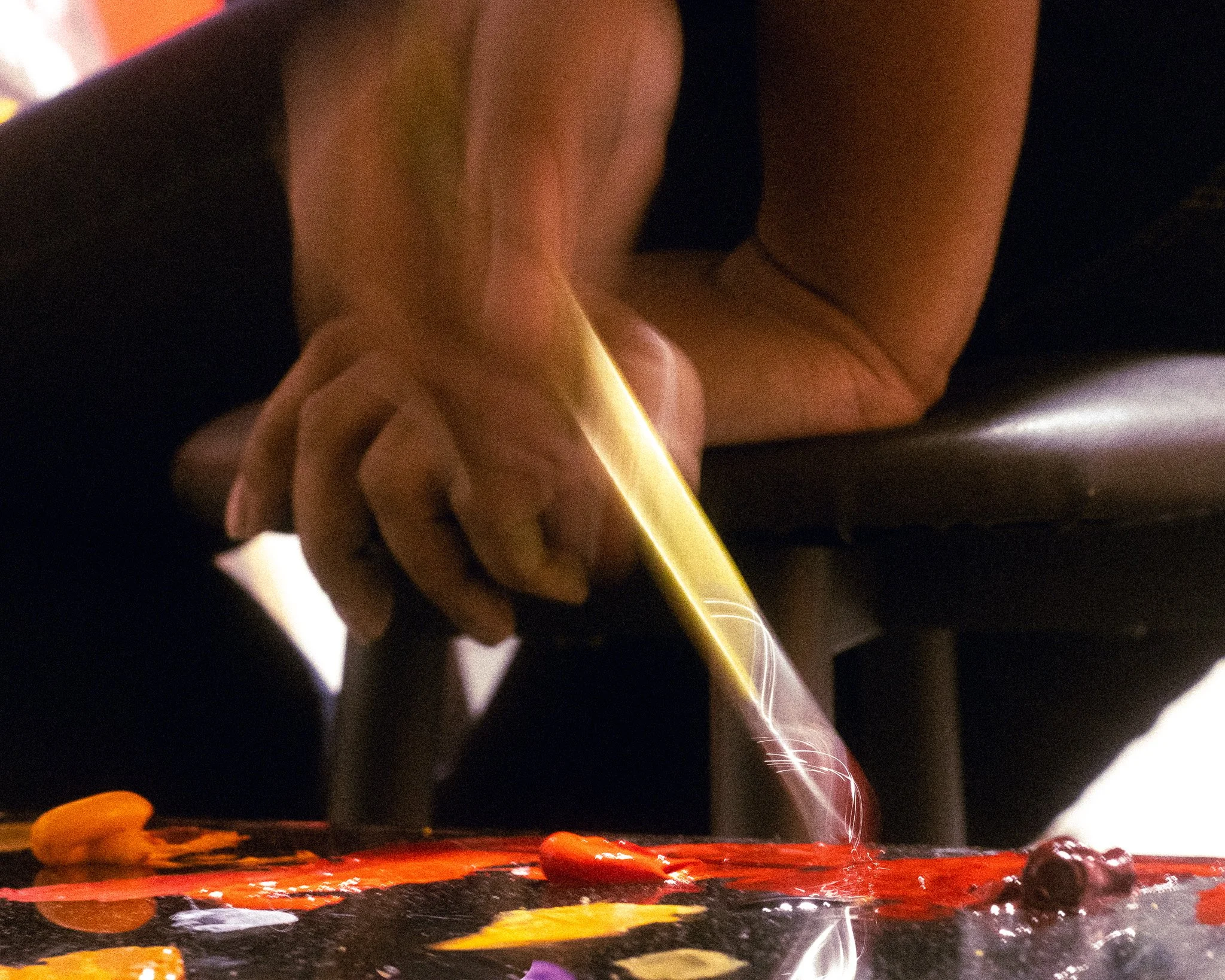
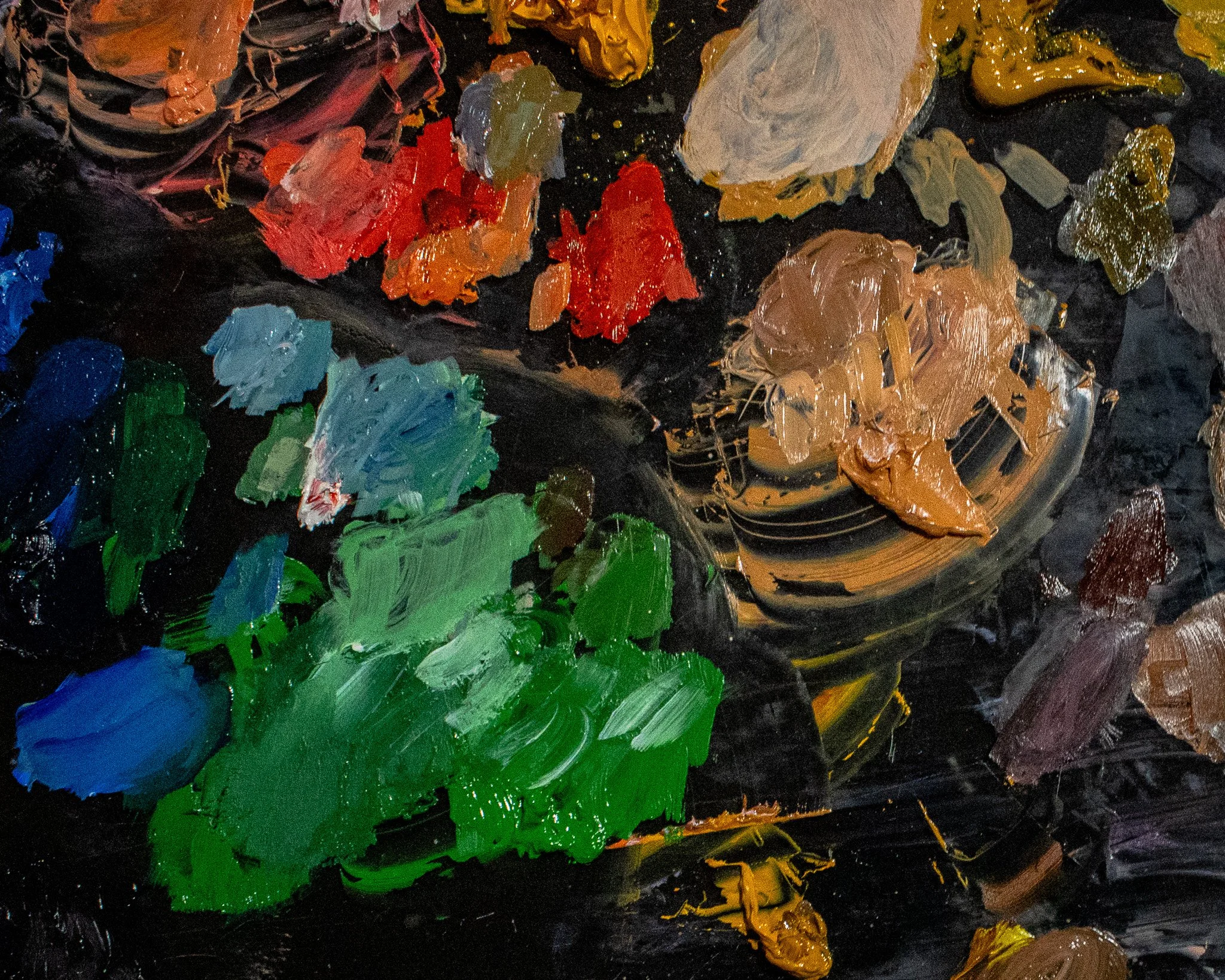
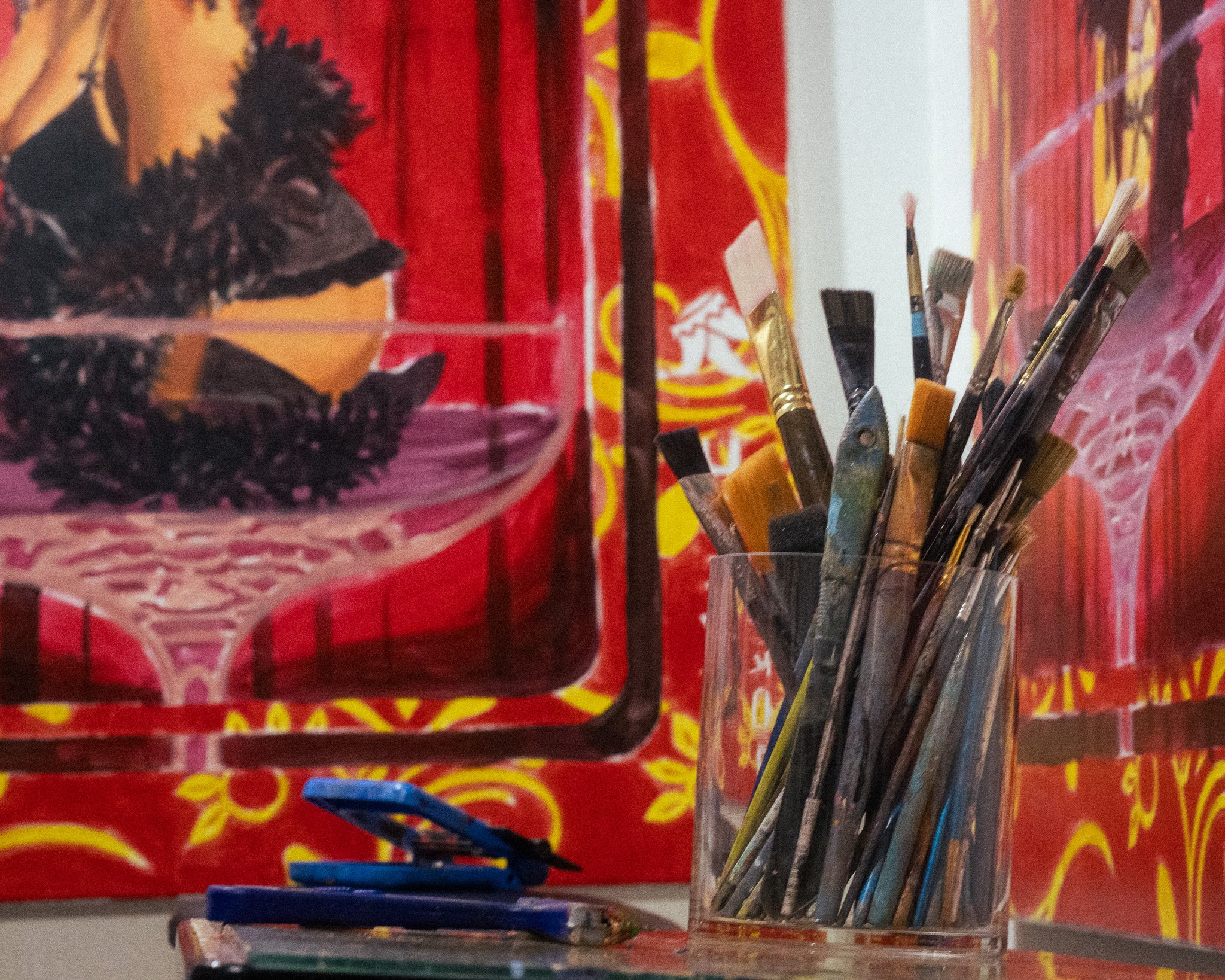
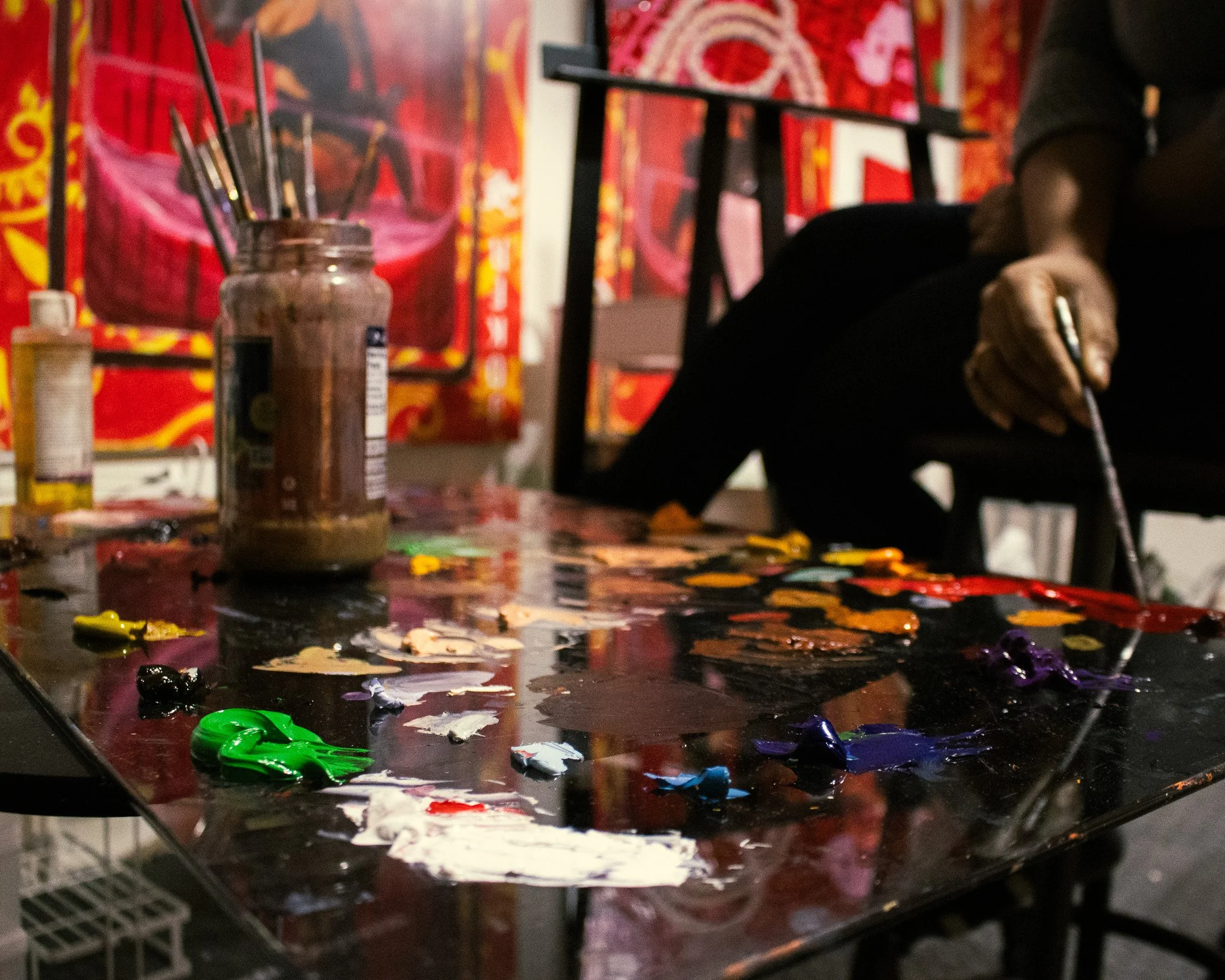
As I follow Raven into her basement, the space opens into color. Deep crimson, magenta, gold, and green, the walls feel alive. She has just finished transporting her paintings downstairs, preparing for her newest exhibit, Casino Chaos. Everything here is rooted firmly in the present. The room is filled with in-progress work: oil paint still wet on the palette, props hanging on the walls and tucked into bags, an updated artist bio in a corner nearby. Her older paintings sit quietly in a portfolio pushed deep into the corner.
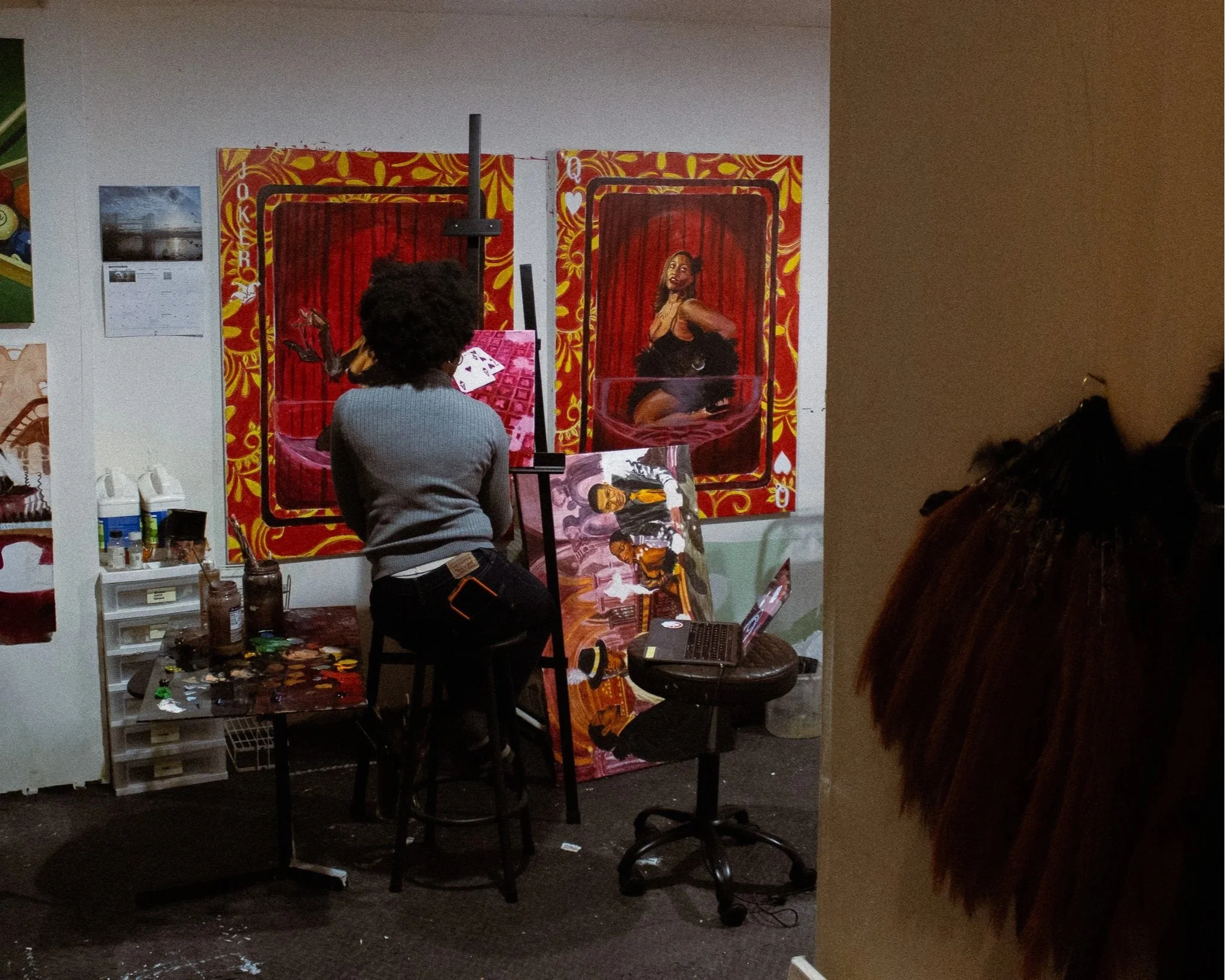
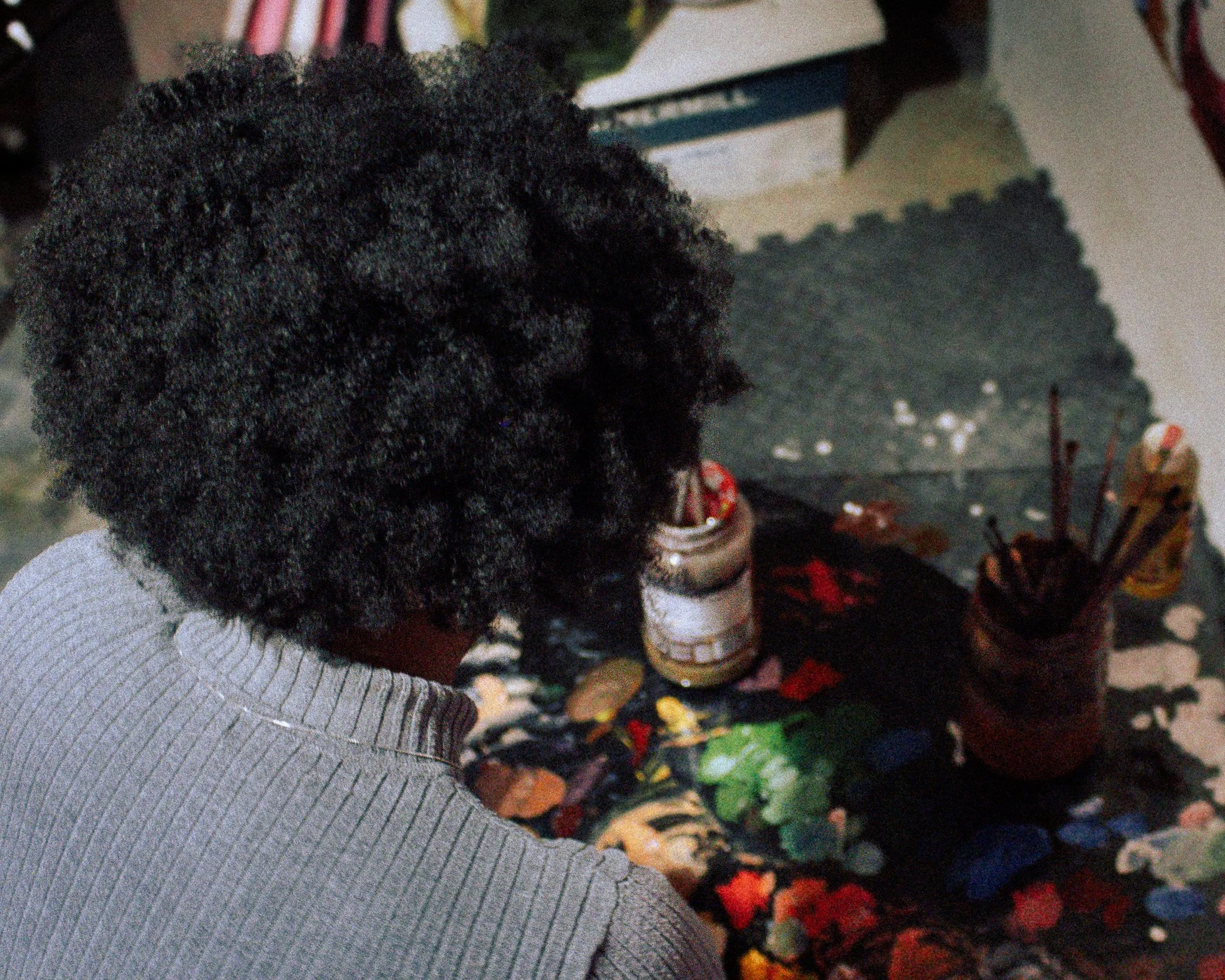
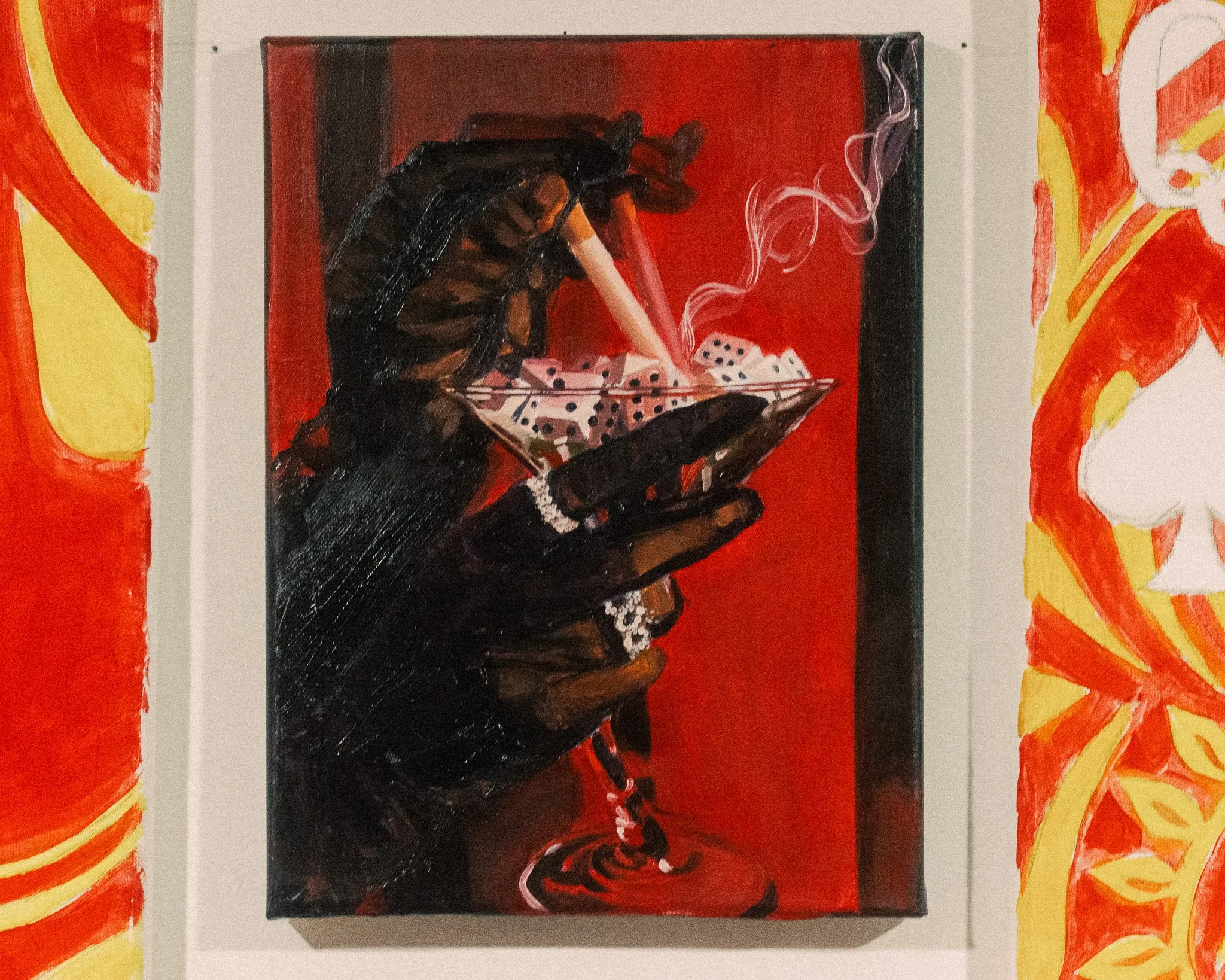
Nothing feels nostalgic. There’s no sense of looking back for comfort. Raven moves through the space with intention, already focused on what’s next. She strikes me as someone who doesn’t linger too long in the past or even the present before pushing forward.
Life at Chiarts
Raven’s relationship to art didn’t begin at ChiArts. Growing up, her parents quietly shaped what she consumed and how she learned to think about art as both expression and structure. Her dad, who has a background in painting and art history helped build an early appreciation of art, while her grandmother was an avid collector, exposing Raven to work as something lived with, not just observed. Art was present, accessible, and normal.
At ChiArts, Raven studied visual arts. The conservatory moved between drawing, painting, graphic design, photography, and sculpture, but painting quickly became her language. Even then, she questioned the traditional path. College didn’t feel neccessary. By sixteen, she was receiving four-figure offers from collectors and gaining attention from galleries outside of school. She was “starting to get a “big head” not from high school but due to her own commitment and artistic success that she achieved.
Her work began sharing space with artists she admired growing up. She exhibited at venues like Expo Chicago at Navy Pier, the Museum of Science and Industry’s Black Creativity exhibition, and the South Side Community Art Center. Much of her work centered on expressions of Blackness, drawing inspiration from artists like Gerald Griffin. “I felt like at that time that was what I needed to paint,” she says. “Almost like that was the only thing I had to speak on as a painter.”
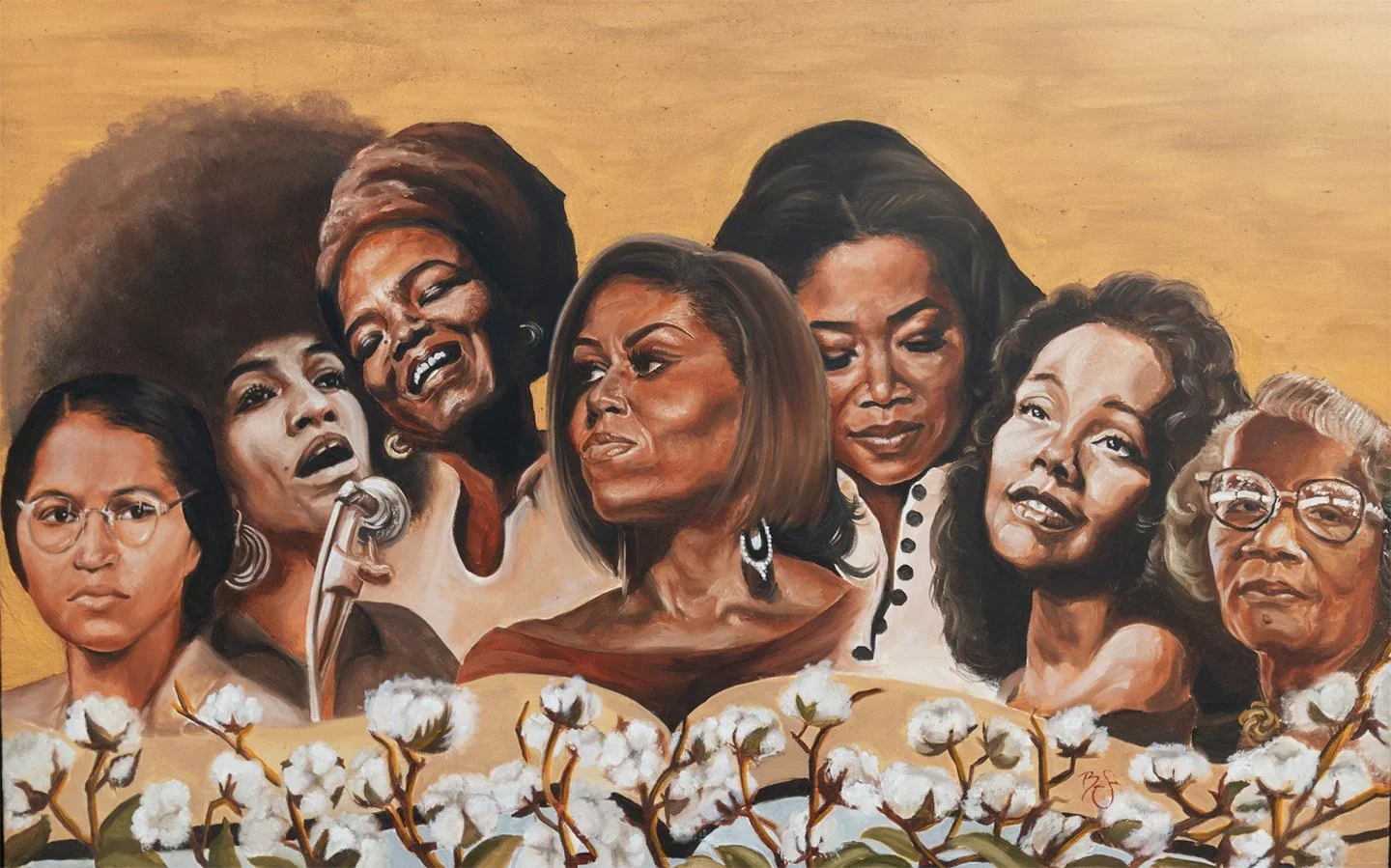

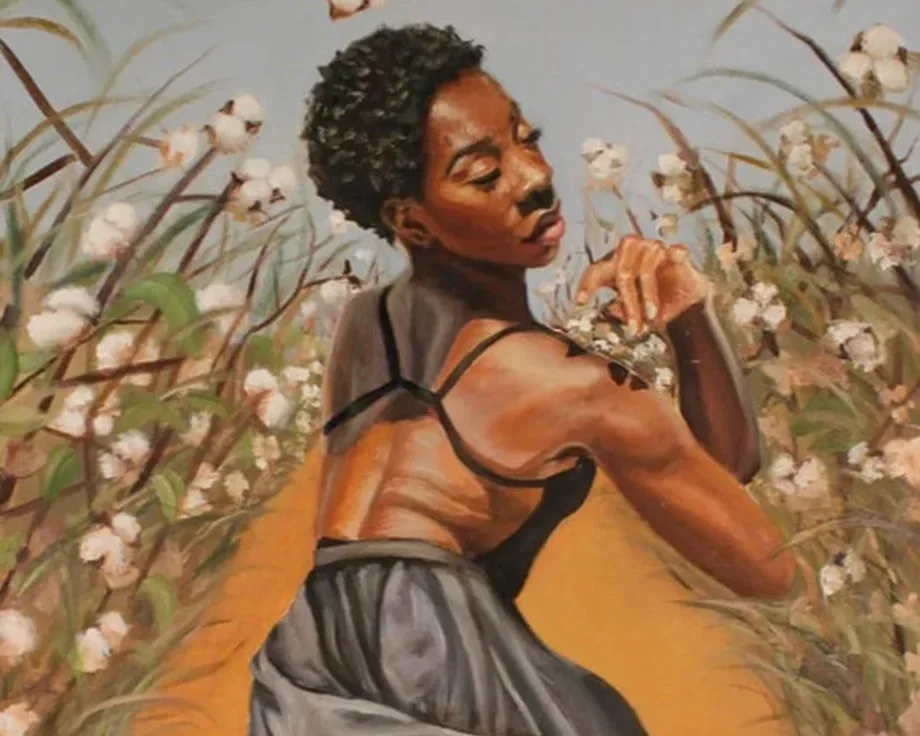
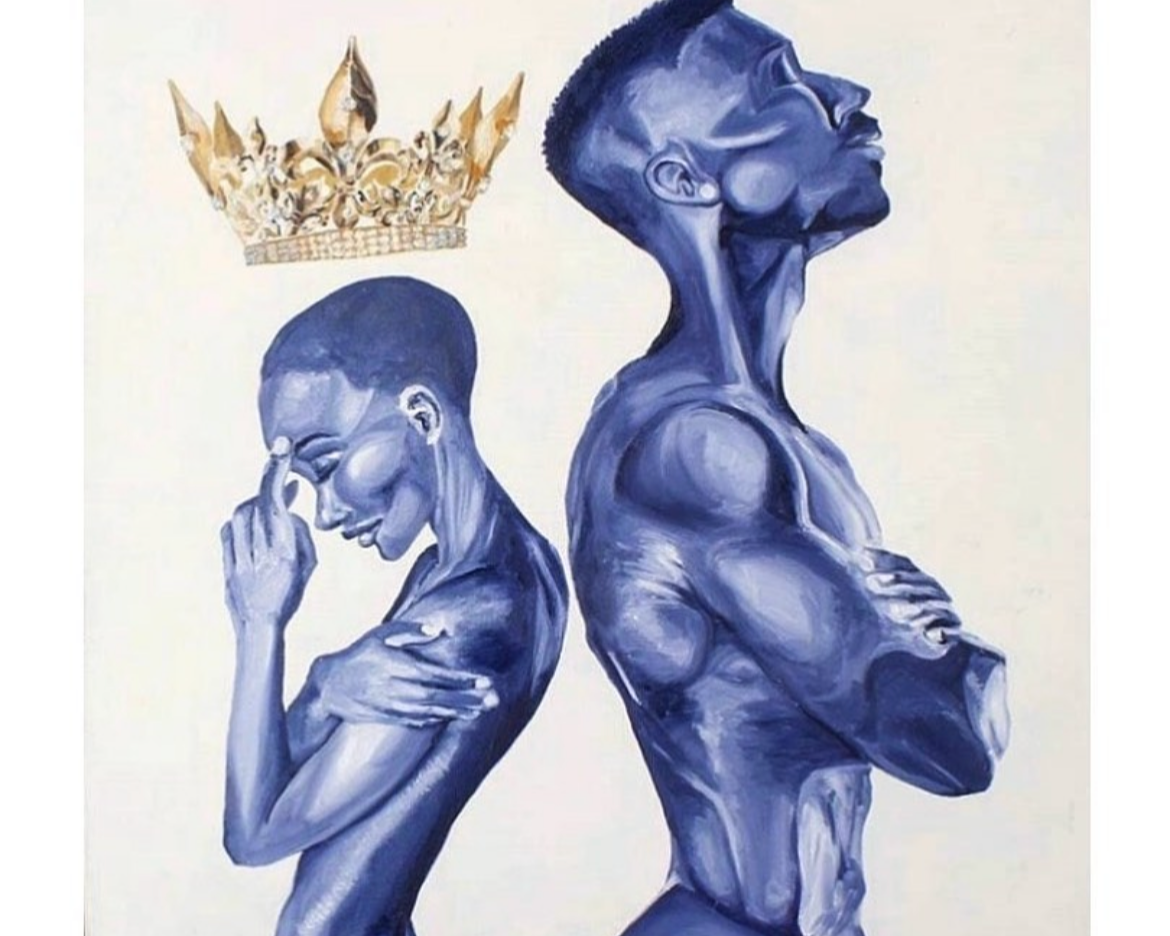
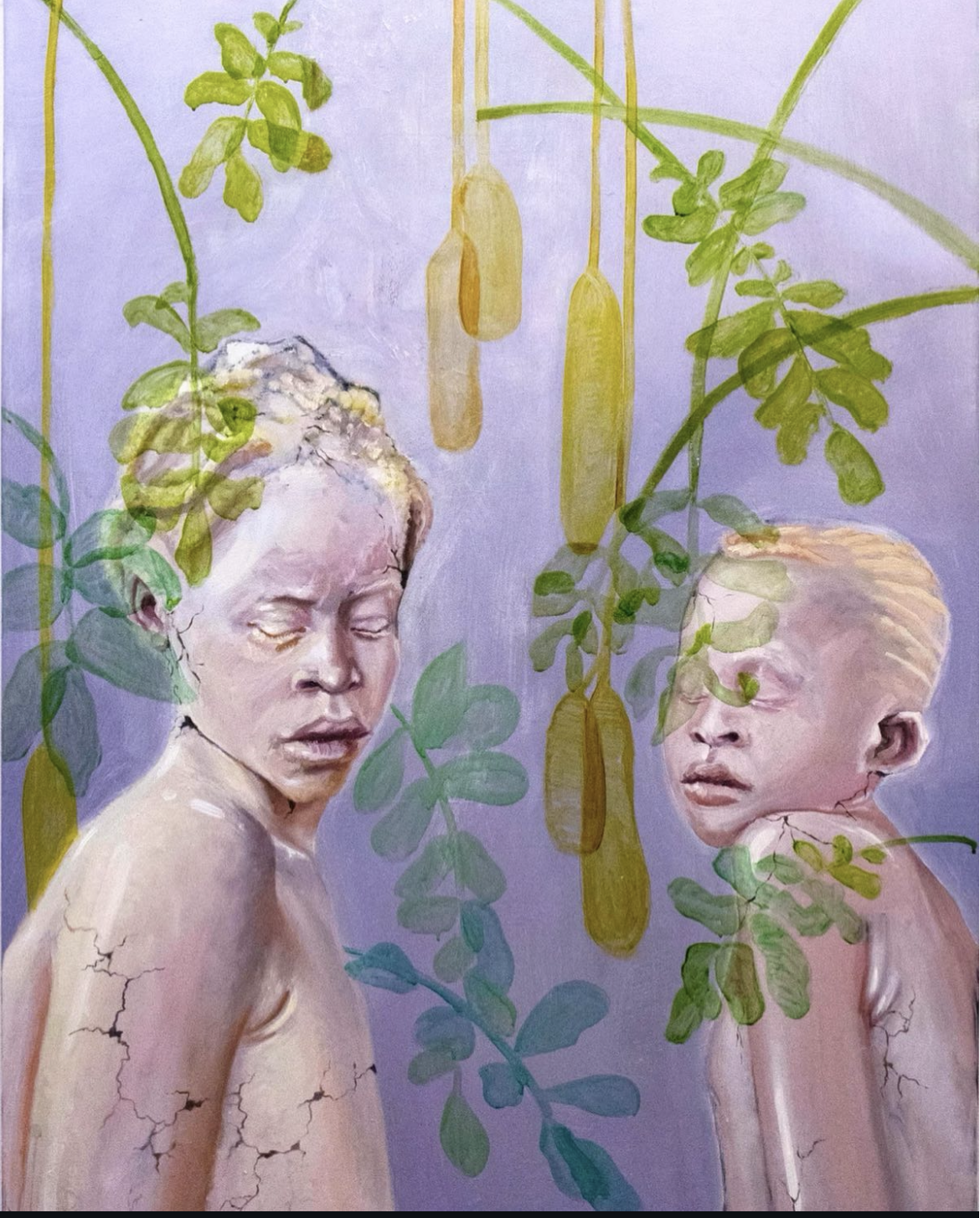
She chased recognition and sales, measuring herself against the work she saw black artists get success from historically. Looking back, she sees how much of that work came from imitation, copying what had been celebrated, hoping proximity to the greats would translate into legitimacy.
The In-Between
After ChiArts, Raven enrolled at SAIC (School of the Art Institute Chicago) after her parents told her skipping college wasn’t an option. Her first studio class was a mixed junior-level course taught by Ms. Rapone: the same painting teacher who had guided her in high school and would once again play a pivotal role in her growth as an artist. Raven felt boxed in by her own expectations, unsure if she was capable of making work outside the subject matter she had become known for.
At the time, she was emotionally stuck, navigating a breakup and struggling to generate ideas. Ms. Rapone encouraged her to stop overthinking and “do something fun.” That advice shifted everything. Raven made Trick Shot, the first piece that broke the pattern and set off a domino effect that continues today.
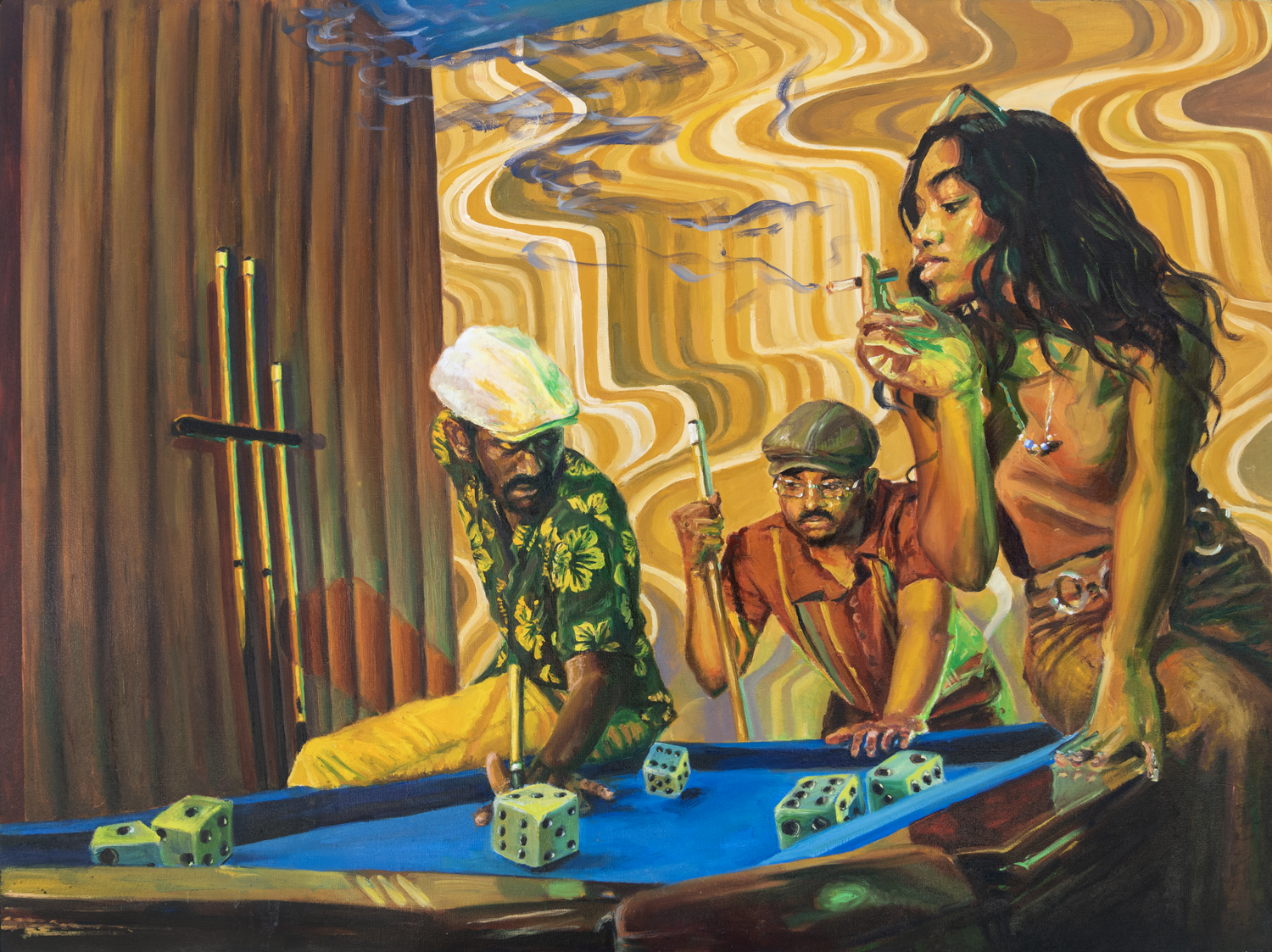
Trick Shot by Raven Smith
She began creating without a fixed message, dressing friends in era-defining clothing, pulling from film, music, and color psychology, and leaning into the escapist nature of cinematography. For Raven, this shift was freeing. Growing up, most representations of Black painters she encountered were rooted in cultural heritage or social commentary. While important, that framework felt limiting. This moment gave her the freedom to paint whatever she wanted.
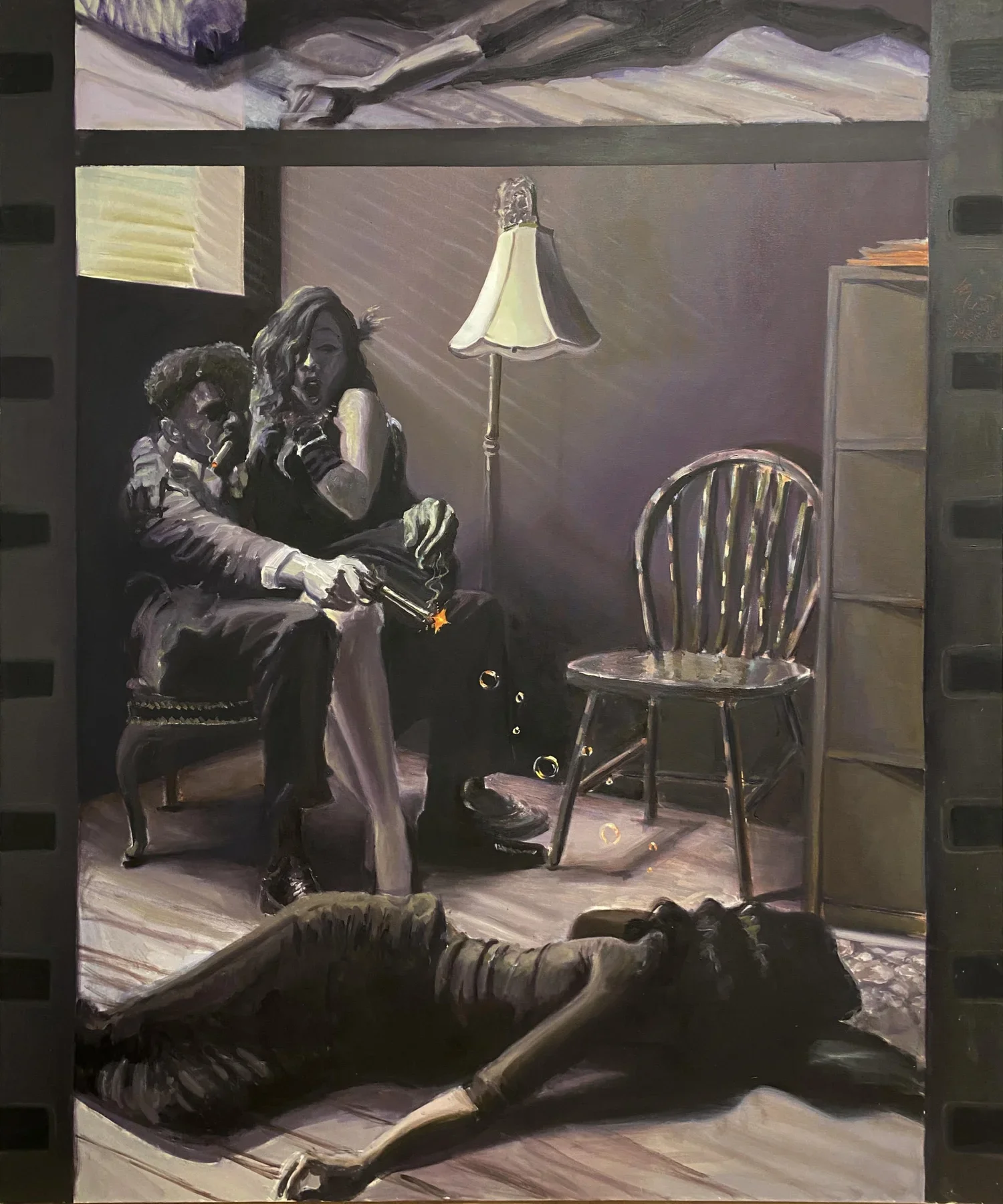
Richard No! By: Raven Smith
Still, doubt lingers. Praise often surprises her. “I don’t even know if I’m processing it,” she admits. “I’m just kind of waiting for a huge break or for someone to really make a big purchase.” The biggest challenge isn’t confidence, its resources. Funding her ideas, trusting the economy, and believing the work will remove her remaining concerns.
Now
Today, Raven is a figurative oil painter and creative director. She’s actively preparing the next phase of ESCAPADE | Exhibitions, an initiative focused on immersive experiences and collaborative artistic worlds. Her goal isn’t simply to display work, but to create environments that allow viewers to step away from whatever they carried in with them.
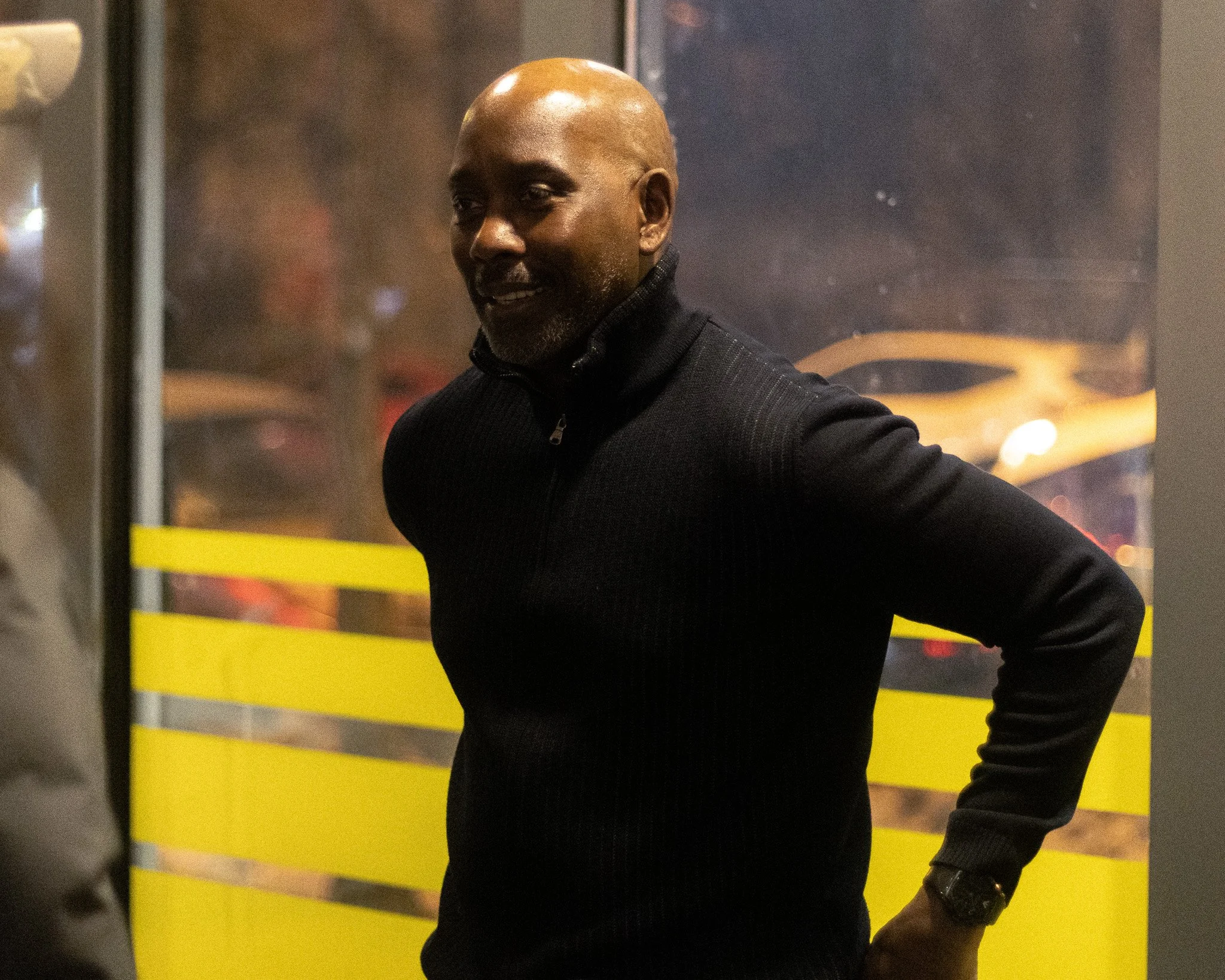
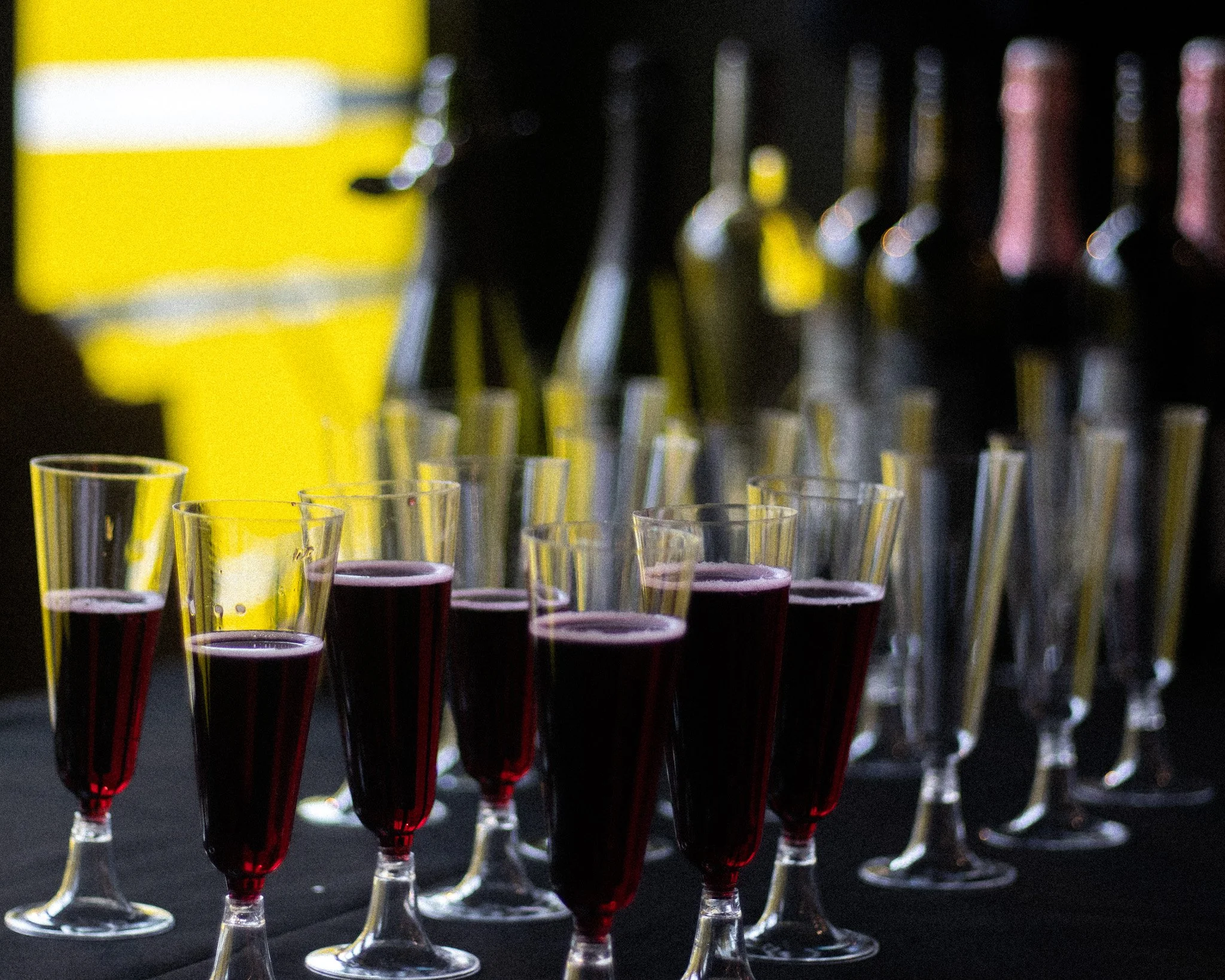
Preparing Casino Chaos wasn’t a solitary process. Raven relied on the people closest to her to help carry the weight of the work. Her father assisted with installing the paintings, carefully helping Raven place pieces in the Connect Gallery in Hyde Park. During the opening, he greeted guests and served wine, moving through the room with ease and warmth. Her mother helped behind the scenes serving food, talking with attendees, managing inventory, doing the invisible work that keeps a night like this moving. Cedric moves the way he did in the house, up and down, checking in, stepping in wherever he’s needed. The labor behind the exhibition is easy to miss unless you know where to look.
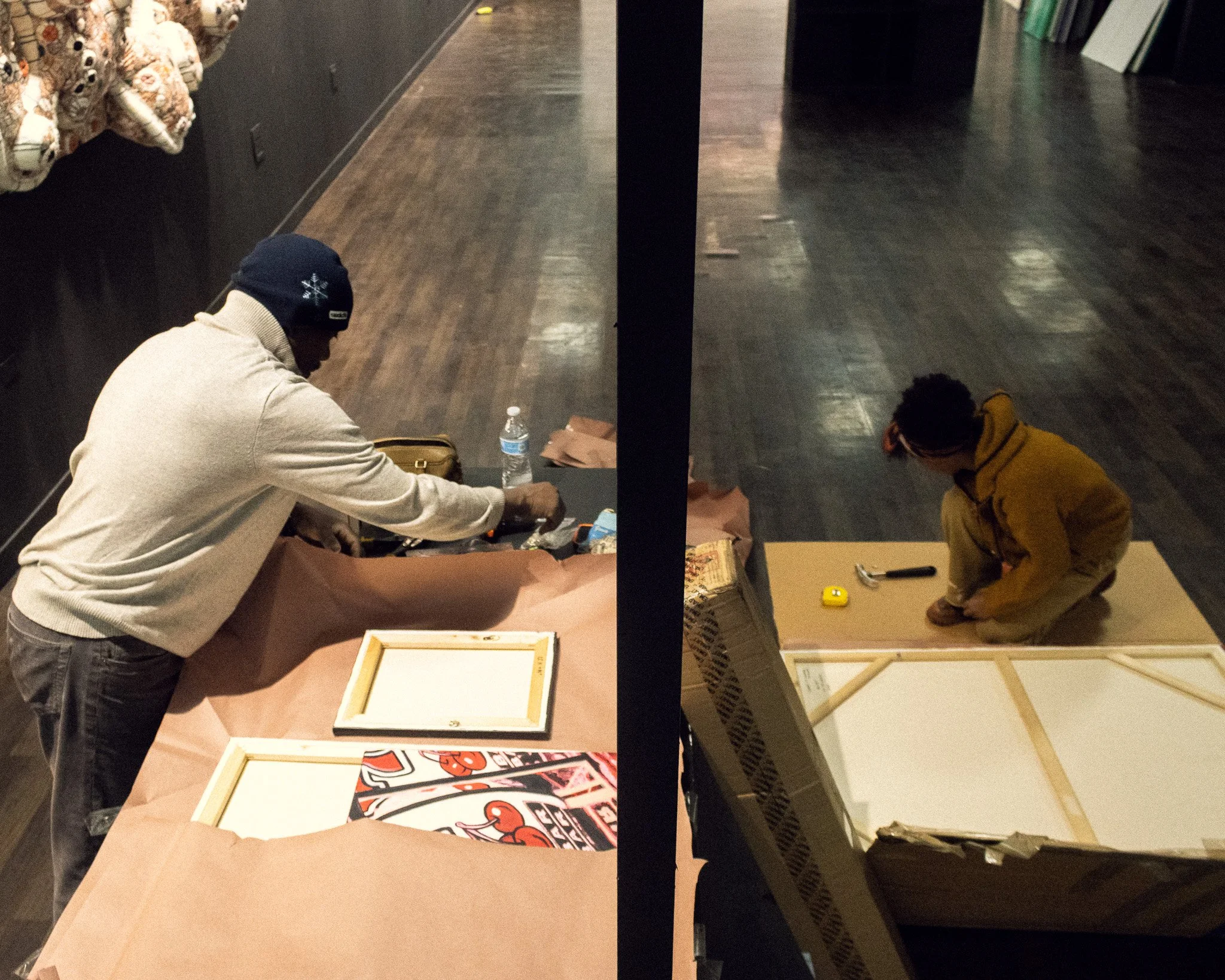
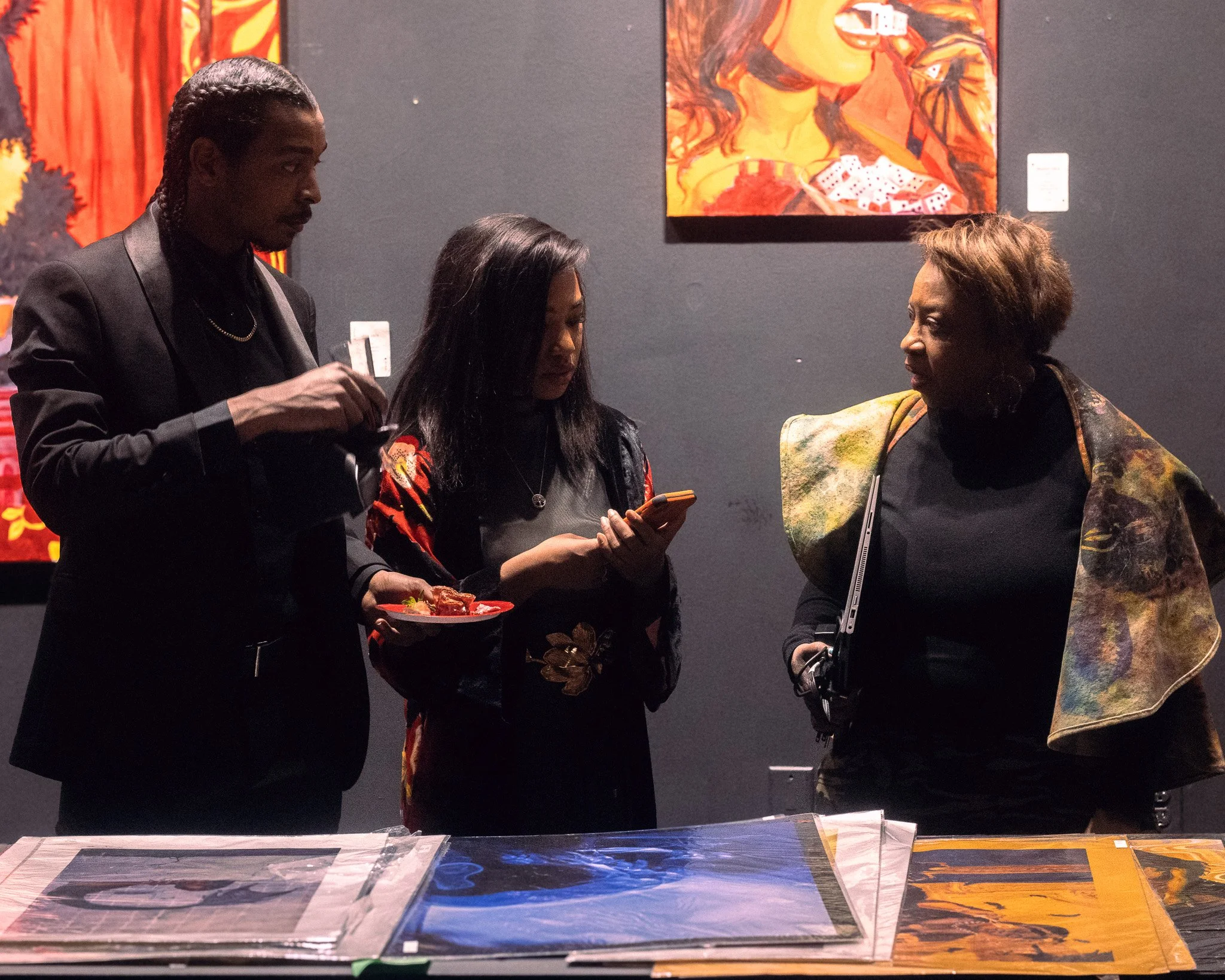
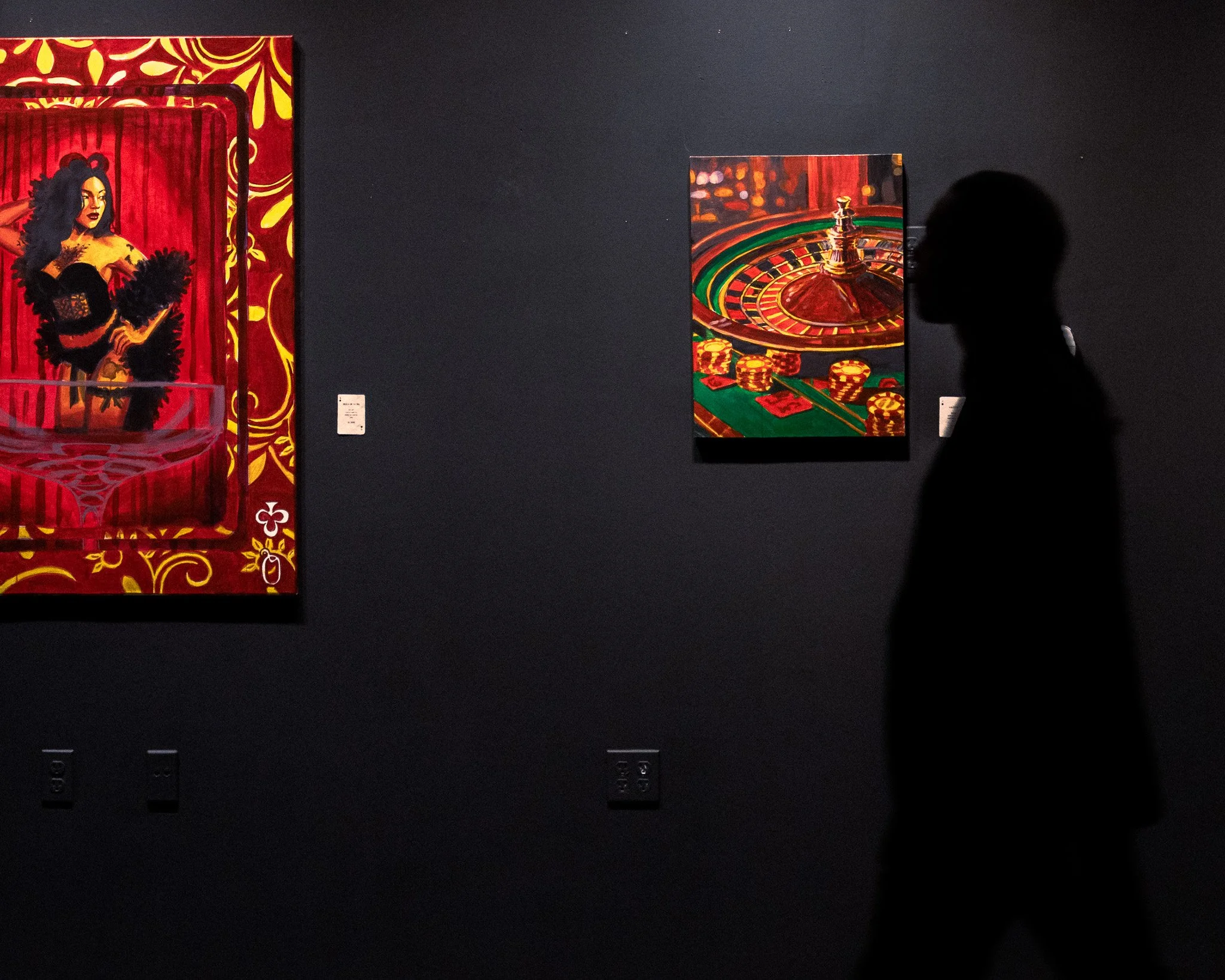
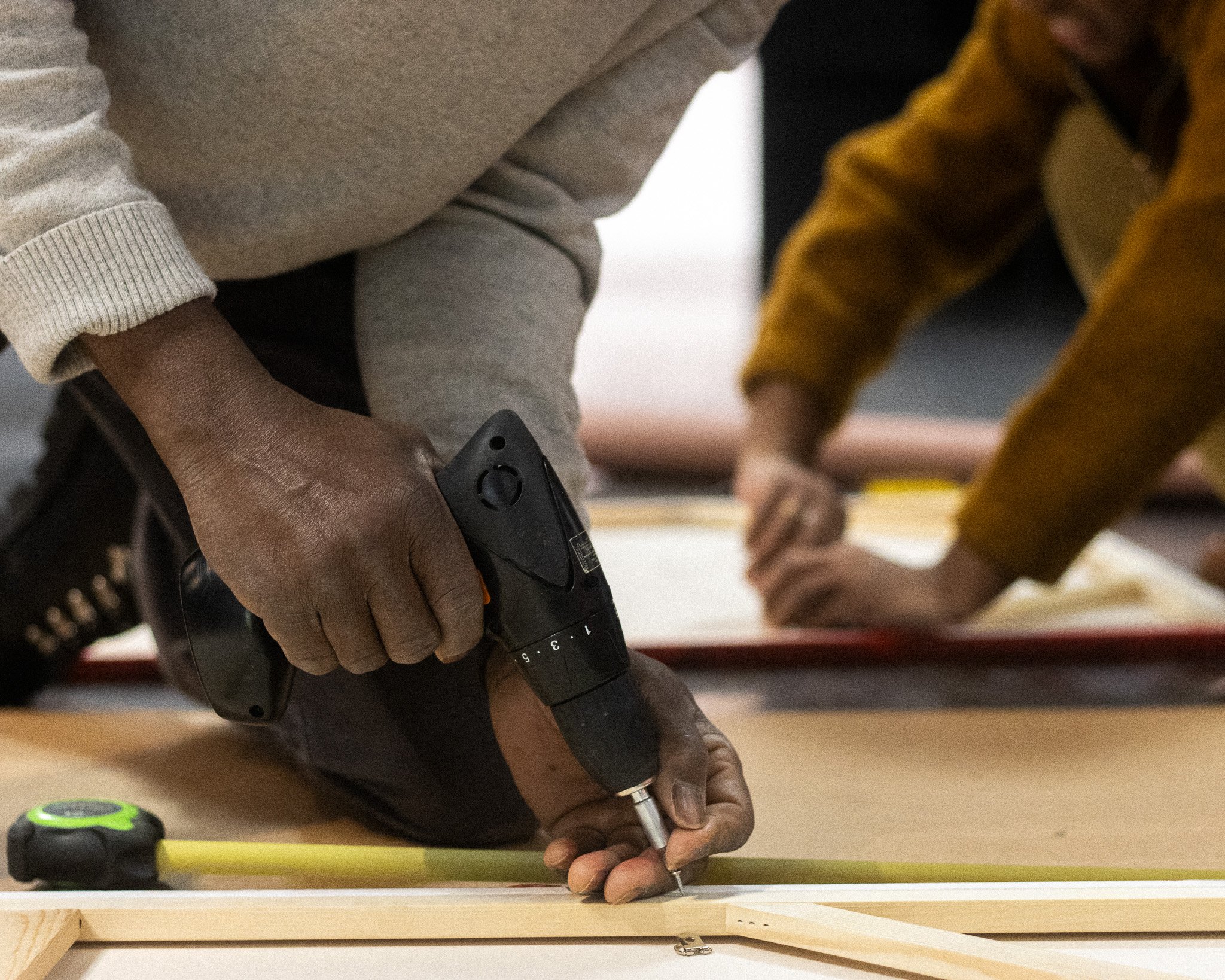
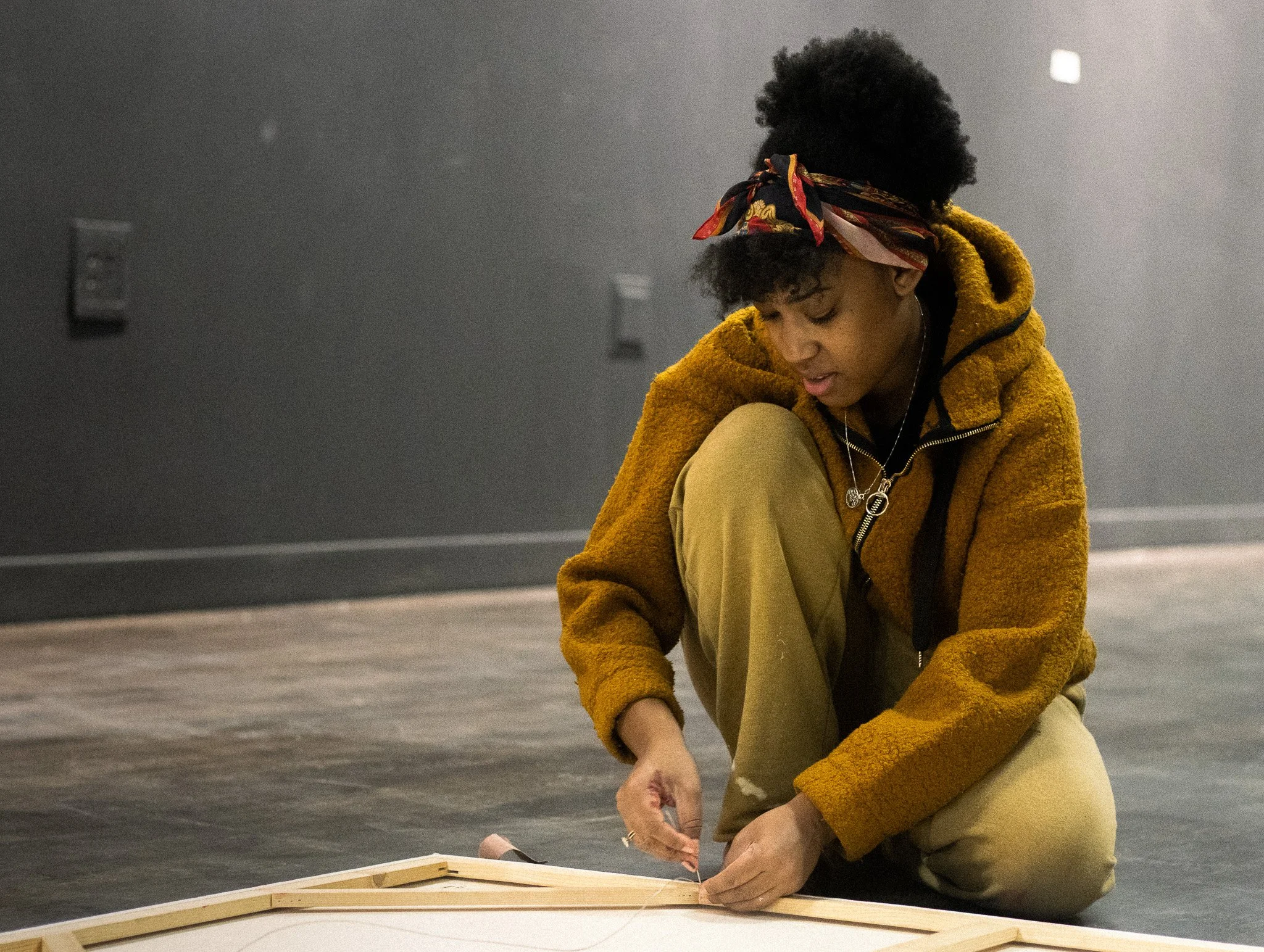
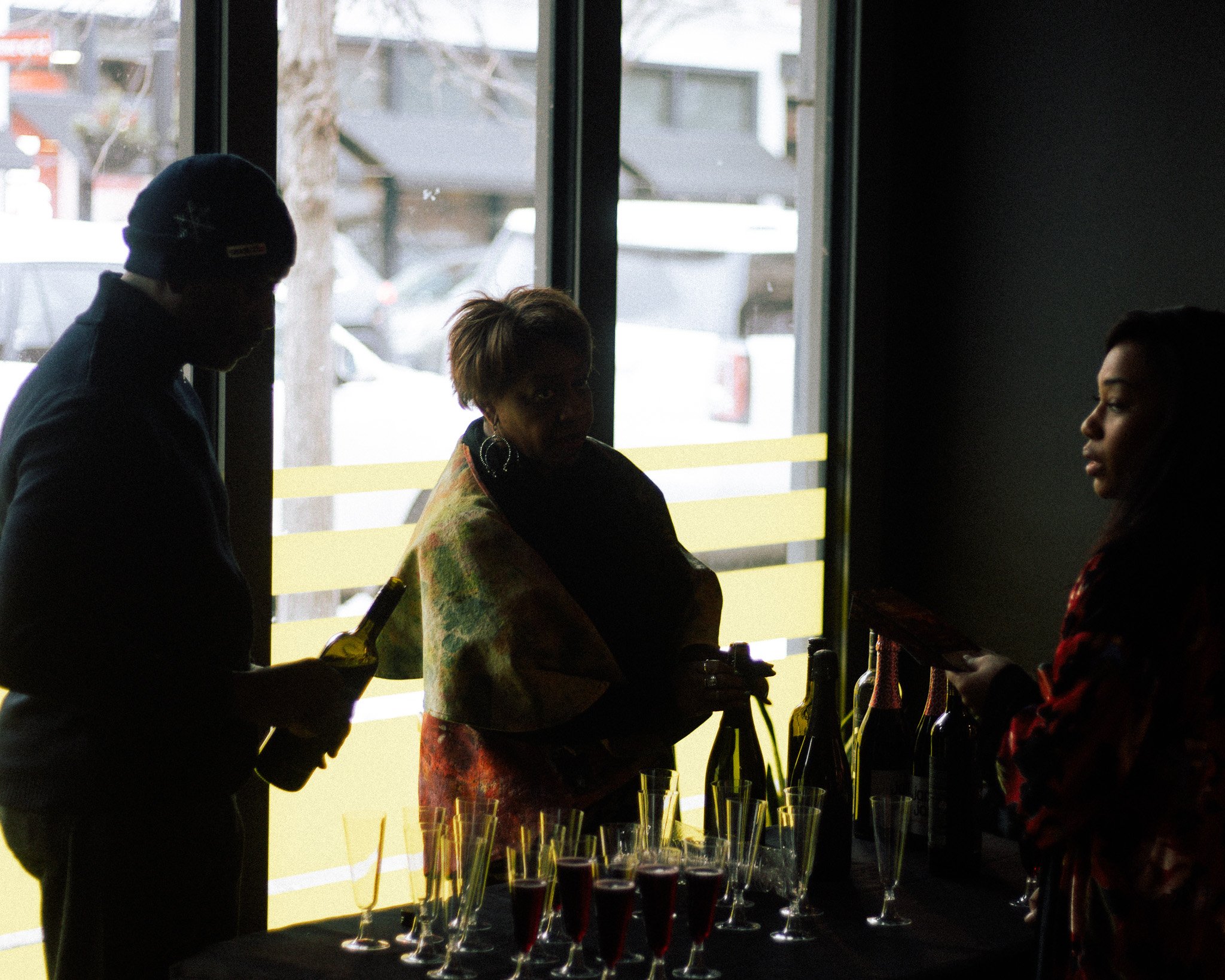
Their support extends beyond the gallery walls. Financial help, logistical planning, and emotional steadiness create the space Raven needs to keep building. It isn’t romanticized, it’s practical, ongoing, and essential.
“A lot of people are looking for distractions,” she says. “No one wants to be stressed, they'd rather temporarily not think about it.” That desire shapes her approach. The passion she had in high school is still there, but the motivation has shifted. She’s no longer interested in being confined to traditional gallery models. Installation, interior design, and event-based work now feels natural. The work has expanded, and so has her definition of what an artist’s life can look like.
In Her Own Words
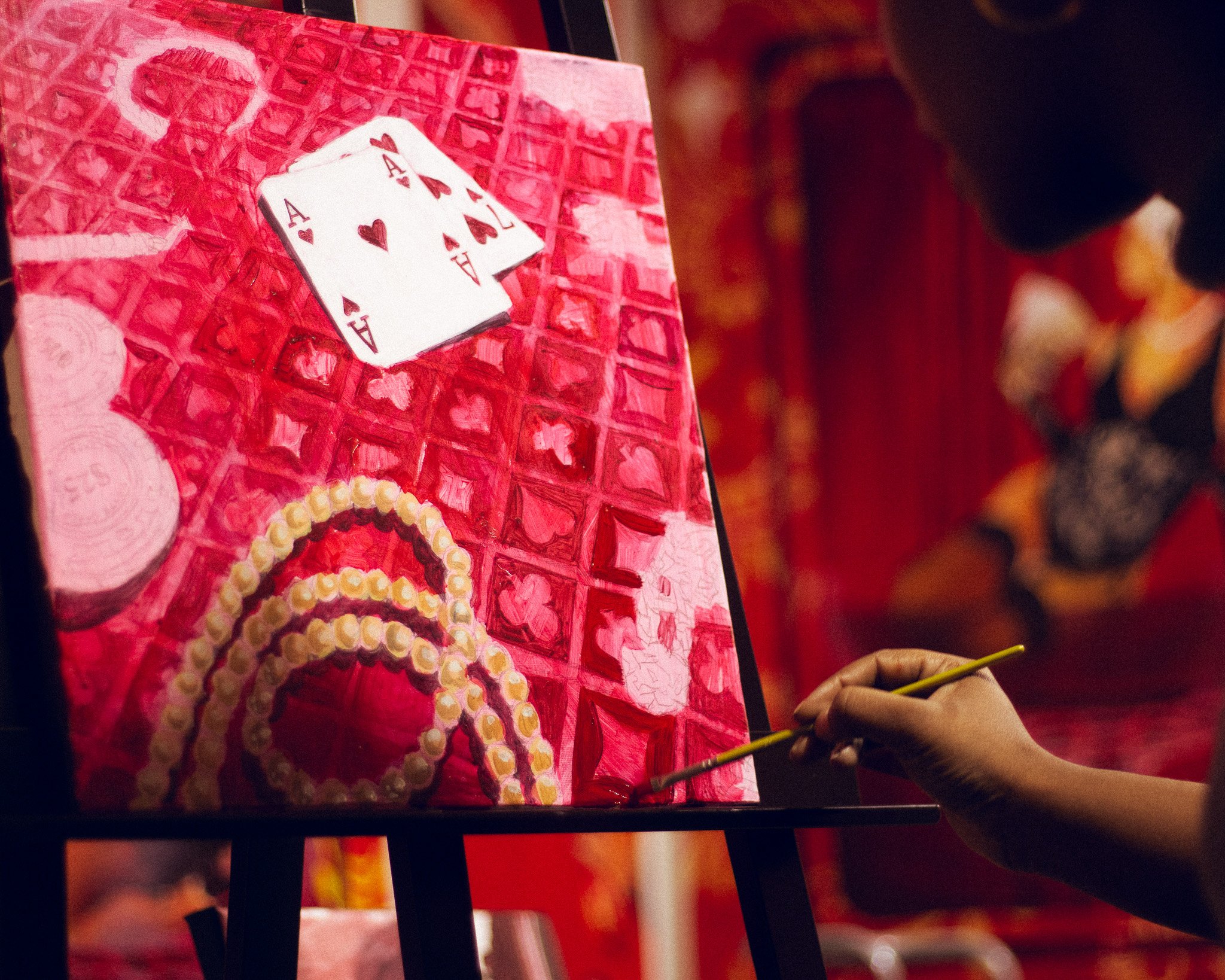
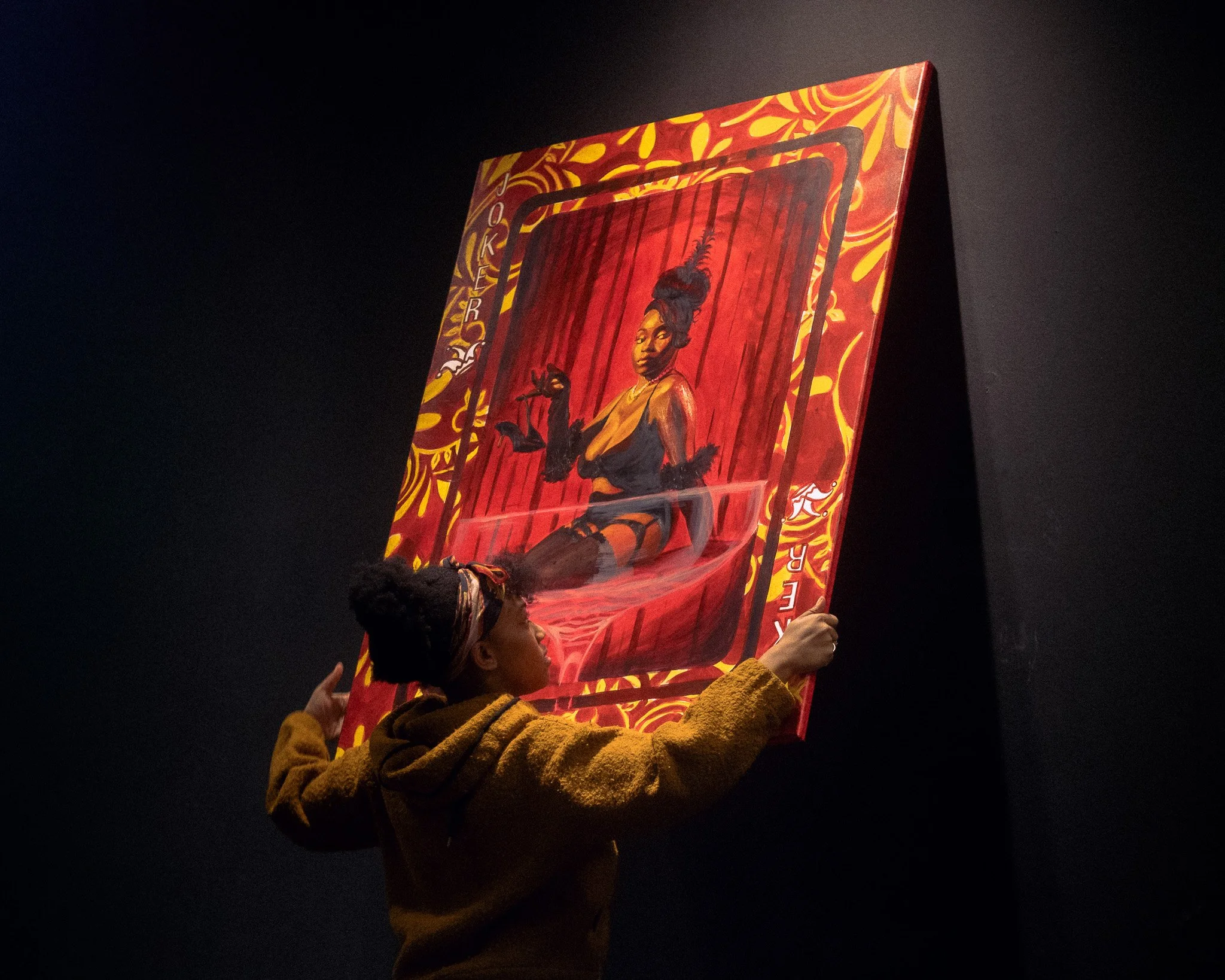
Raven in the process of creating her piece “Betting Belongings”
Success, for Raven, isn’t abstract. “I think success looks like being able to actually live off the art,” “I don’t need to be overly rich, but is the art paying my bills? Is it the reason I’m eating the food on my table?” as she stares intensely into her painting of playing cards.
She’s thinking beyond paintings on walls. Her curiosity keeps pulling her toward exhibitions that reach people who might never buy a single piece. “I might reach more people through something more accessible,” she says. That accessibility feels less like compromise and more like evolution.
Closing
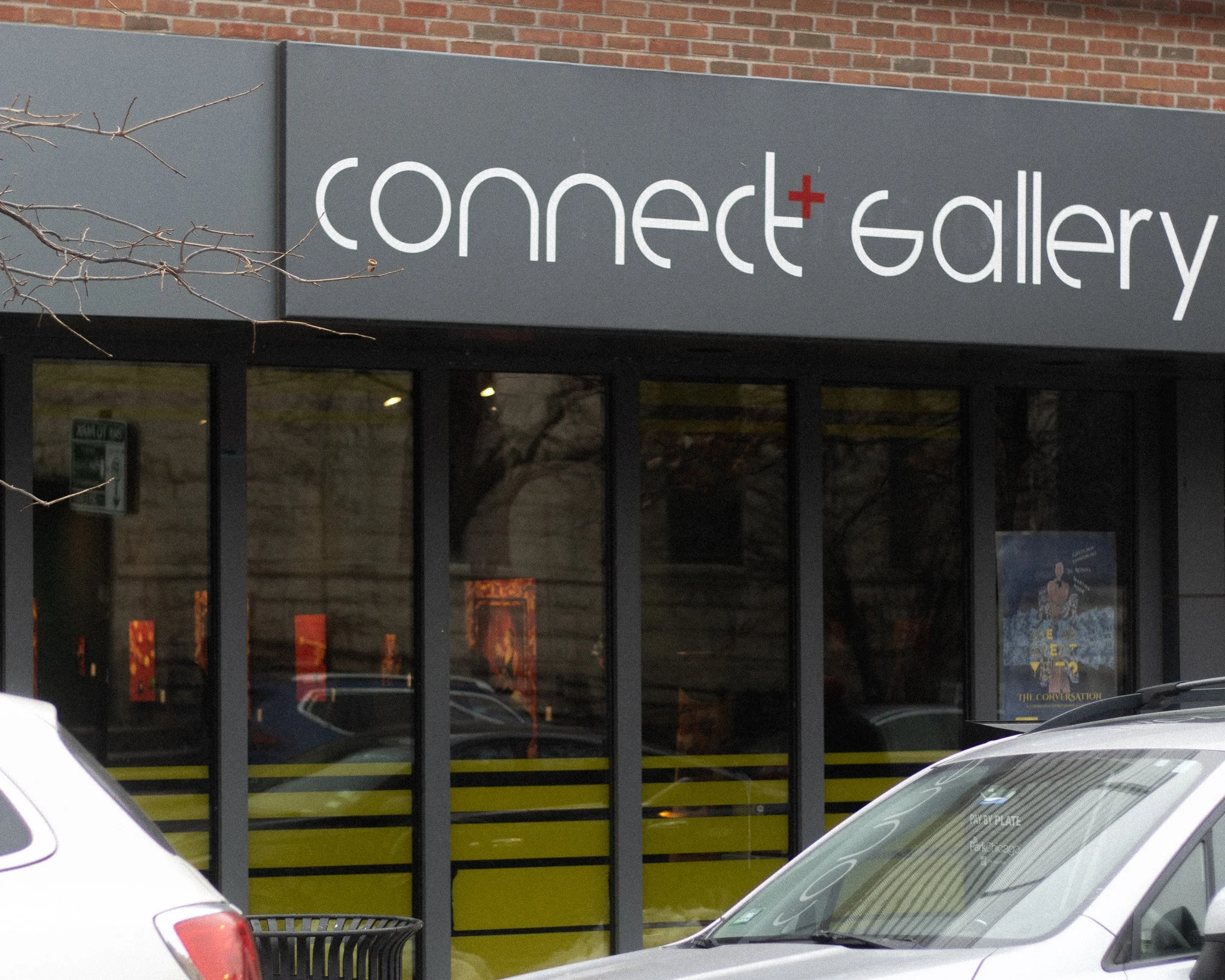
Connect Gallery in Hyde Park, Chicago, IL
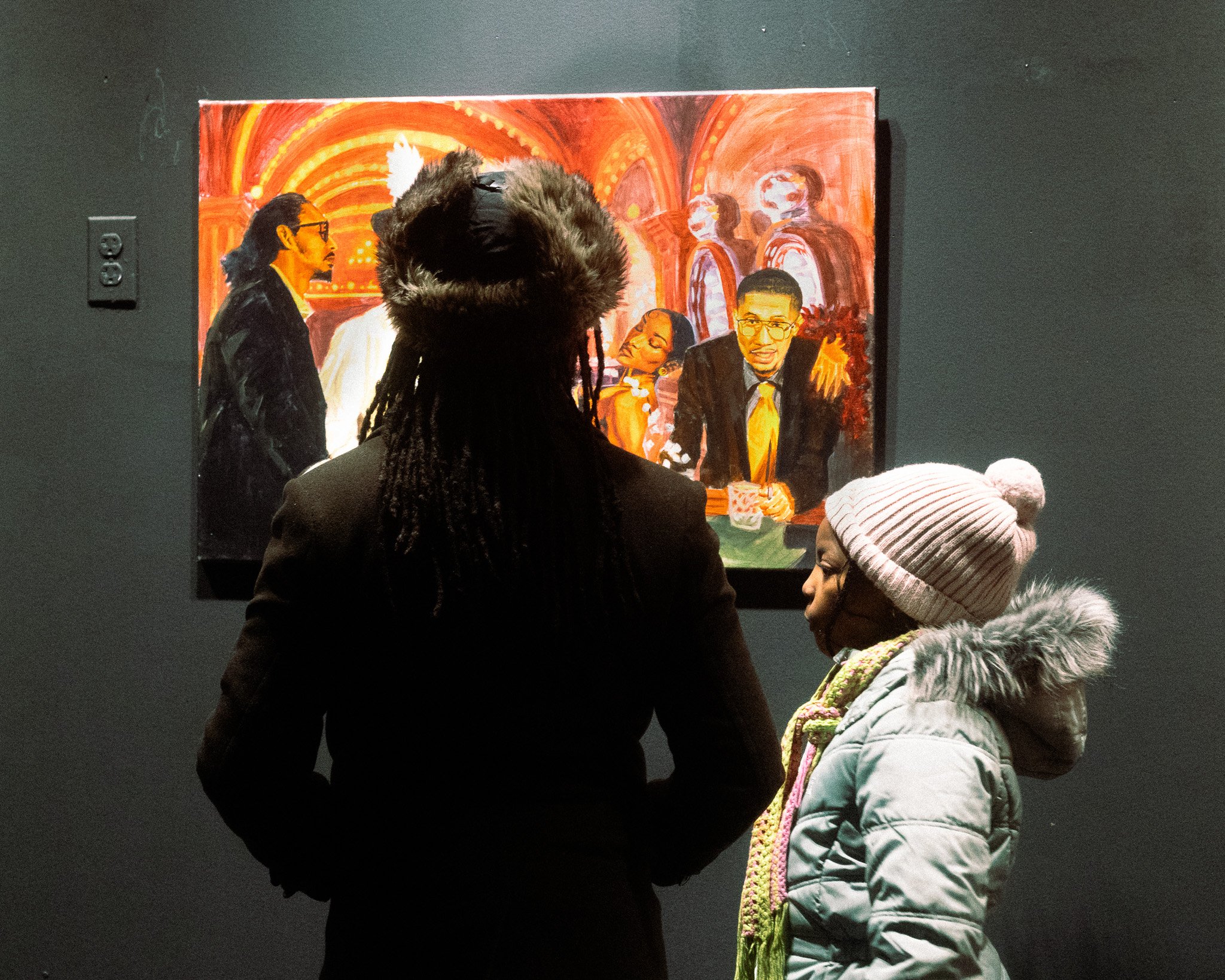
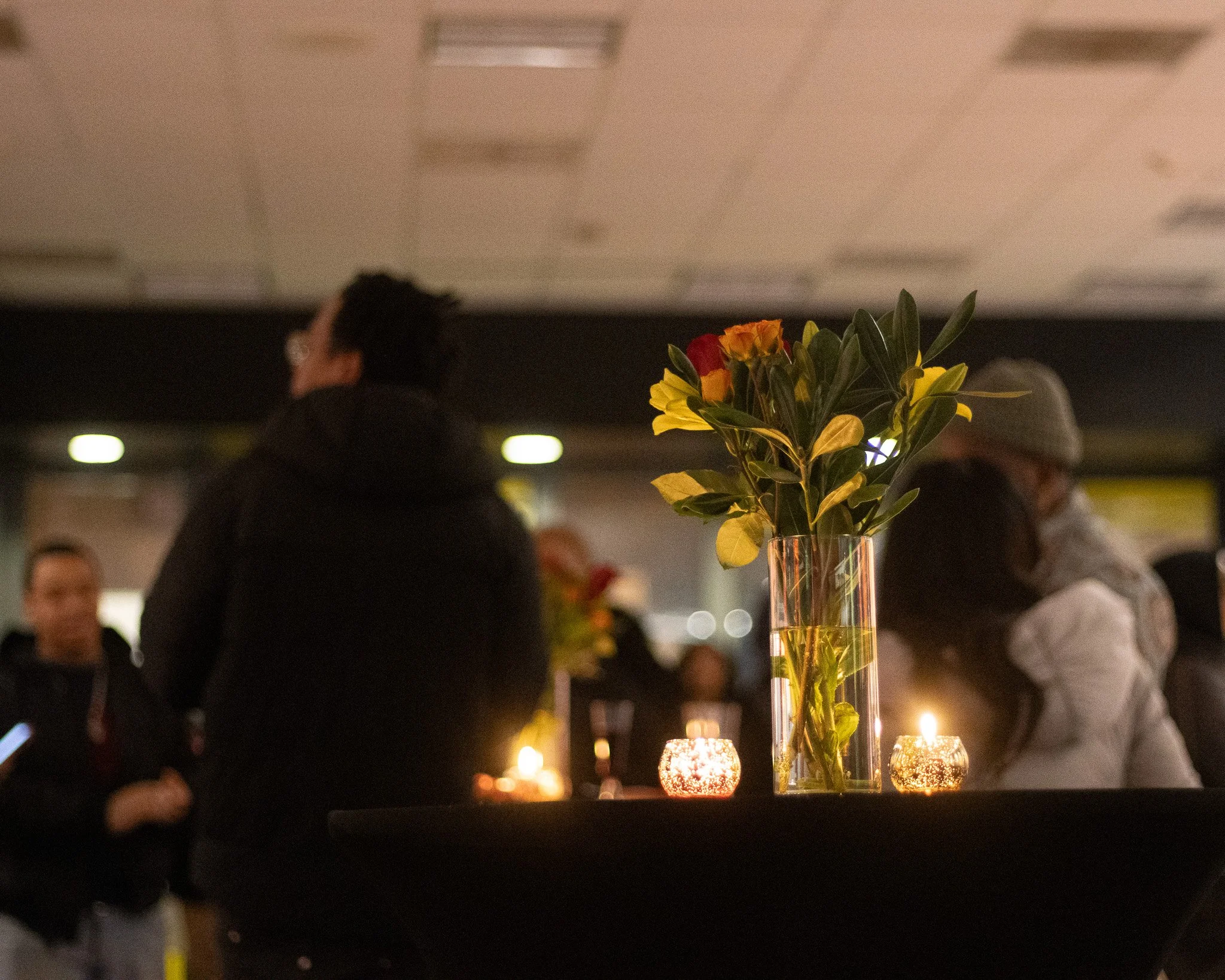
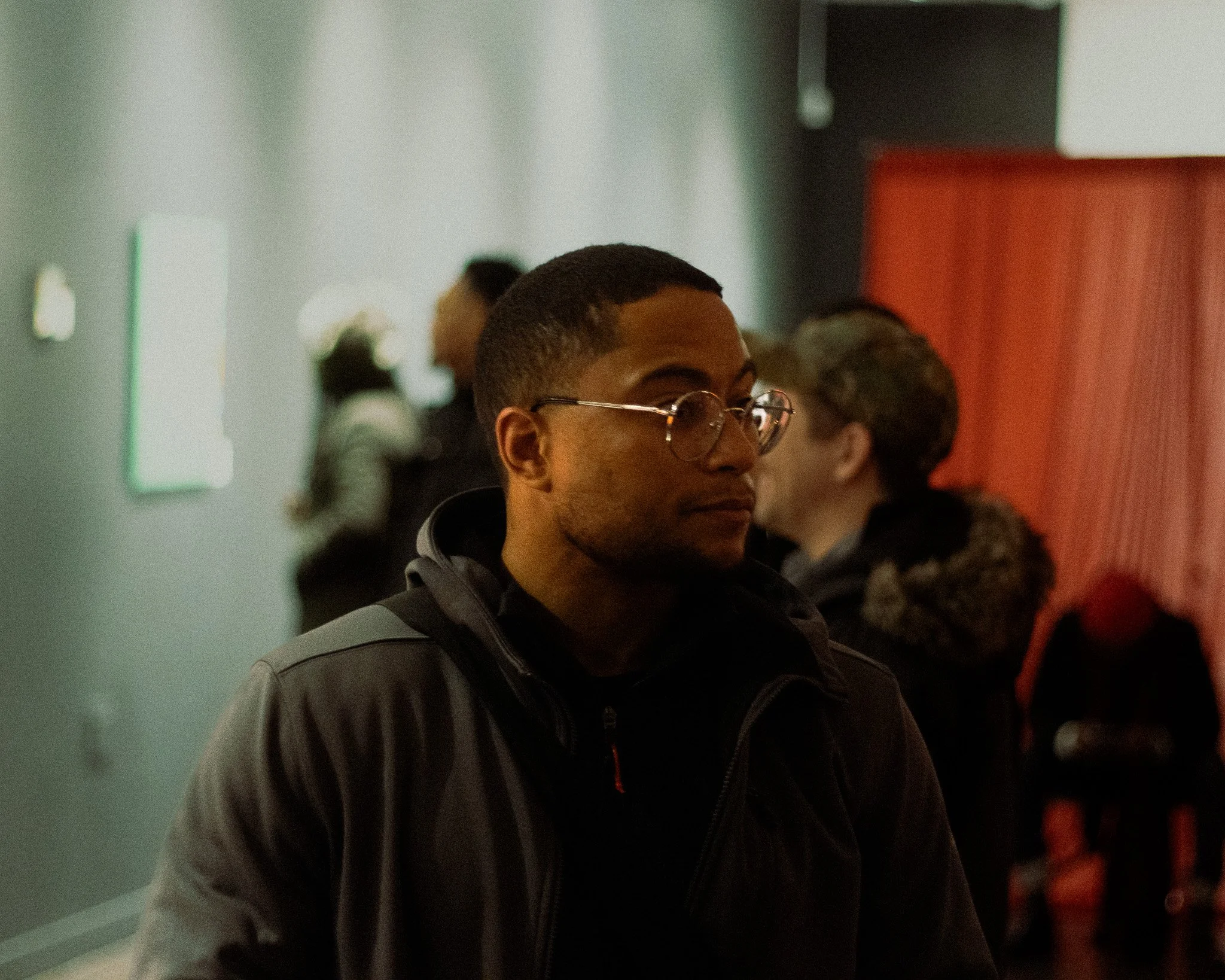
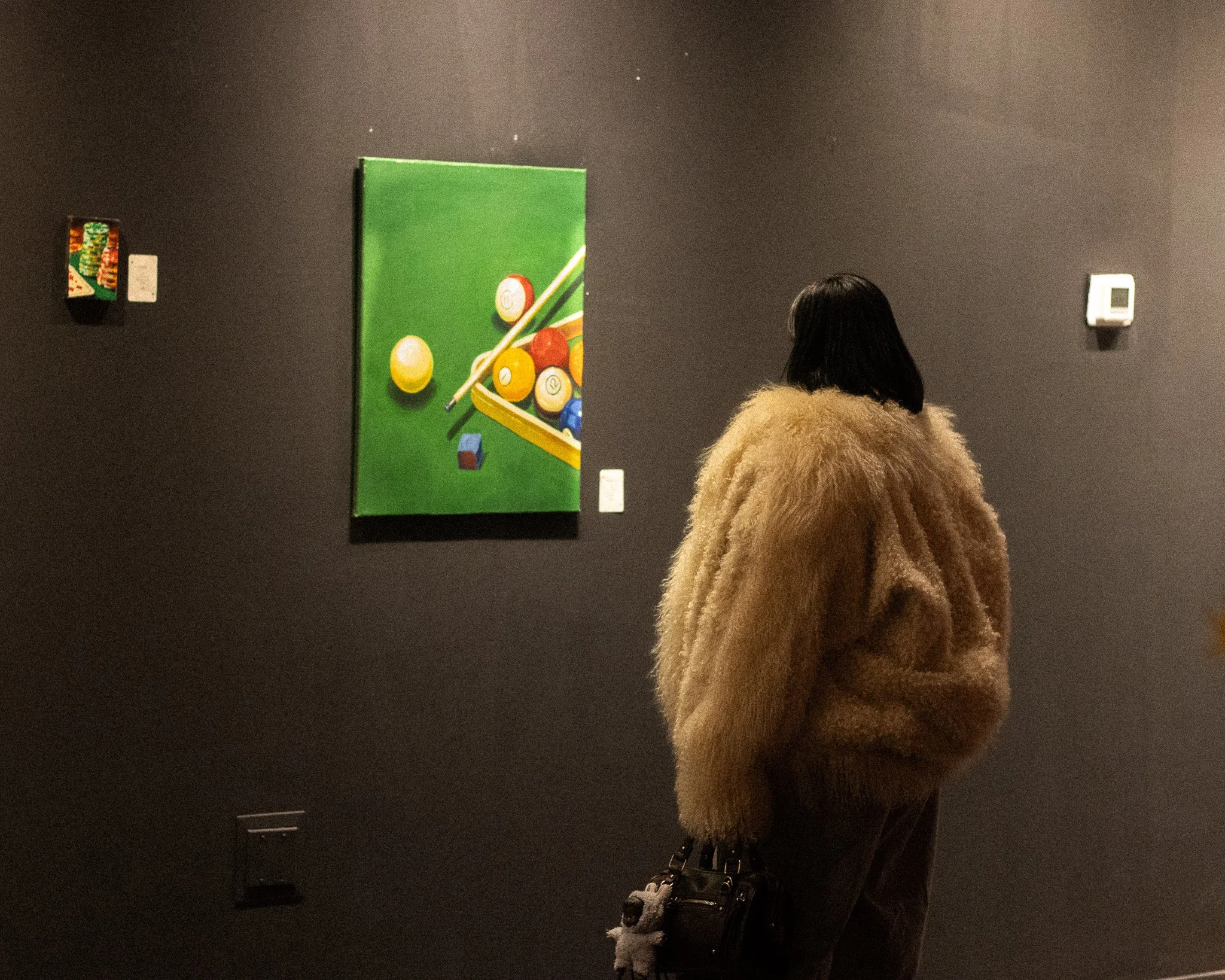
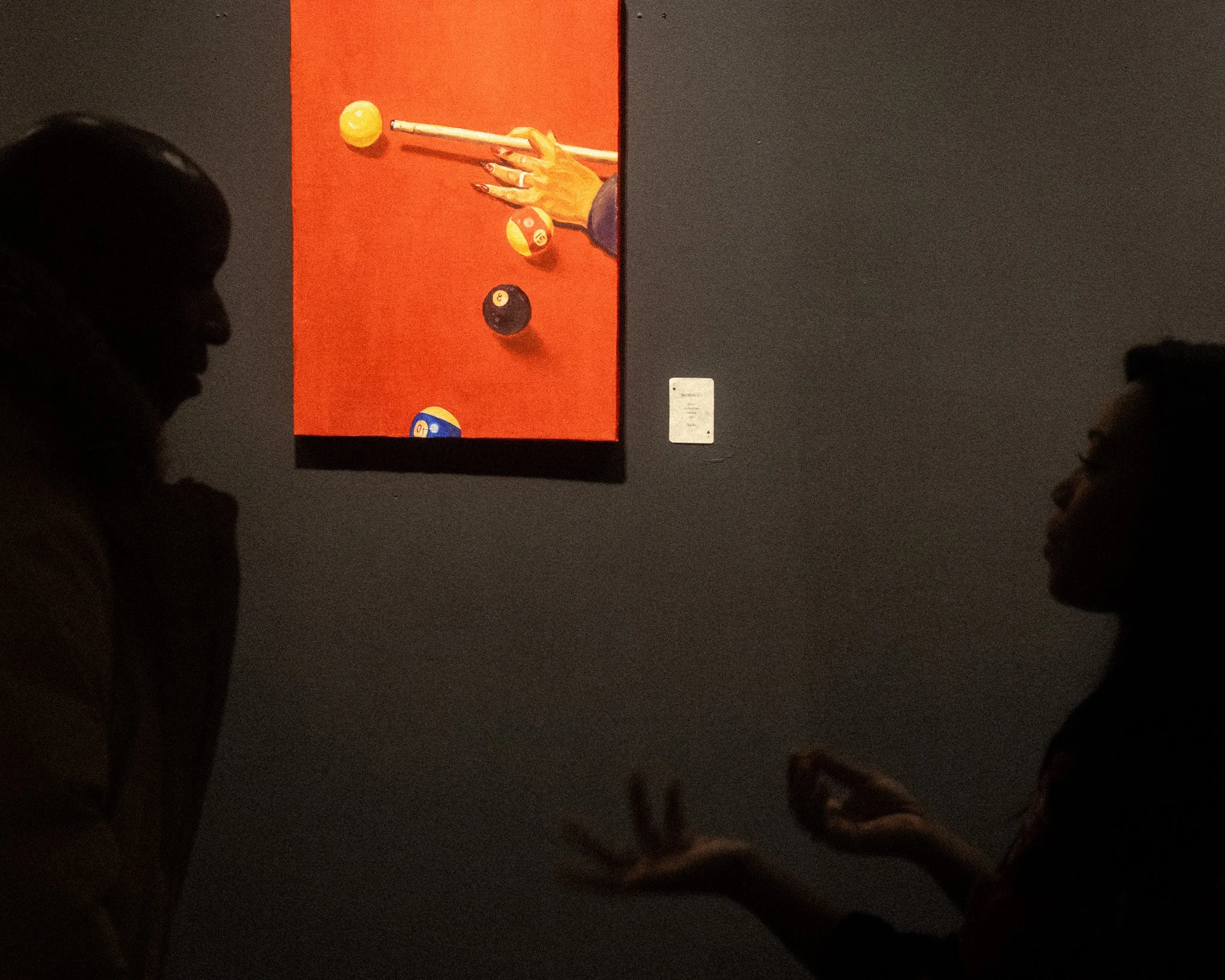
By the time Casino Chaos opens, the room feels full in a different way. I found myself surrounded again by deep crimson, magenta, gold, and green but this time the room is four times larger. Conversations overlap as wine is poured and bodies adjust to the rhythm of the room. The work has left the basement.
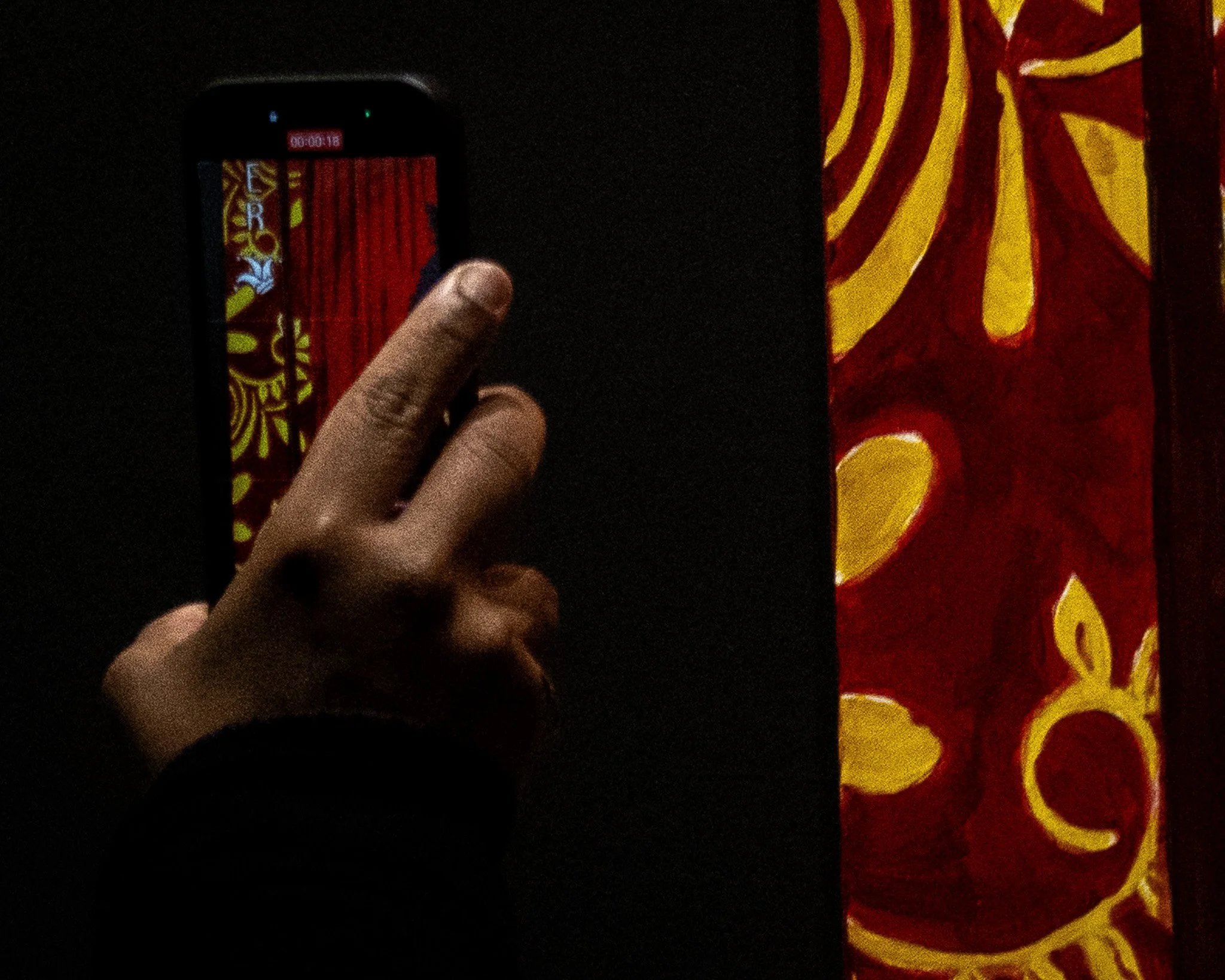
The space is filled with family, friends, fellow creatives, and supporters. Days of little sleep, hours spent installing large pieces, minutes warming up from record cold temperatures, and fleeting seconds of laughter and congratulations all collapse into this moment.
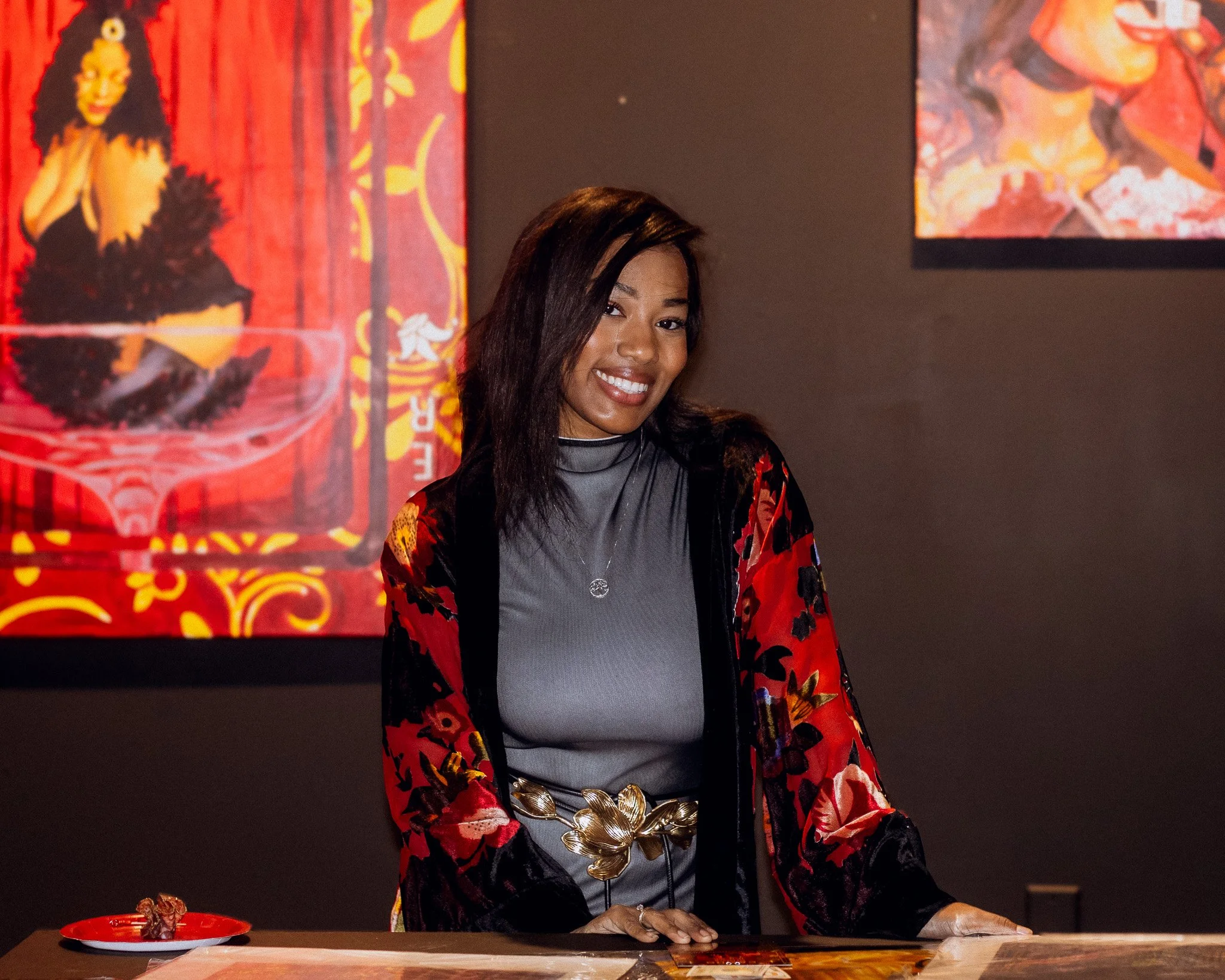
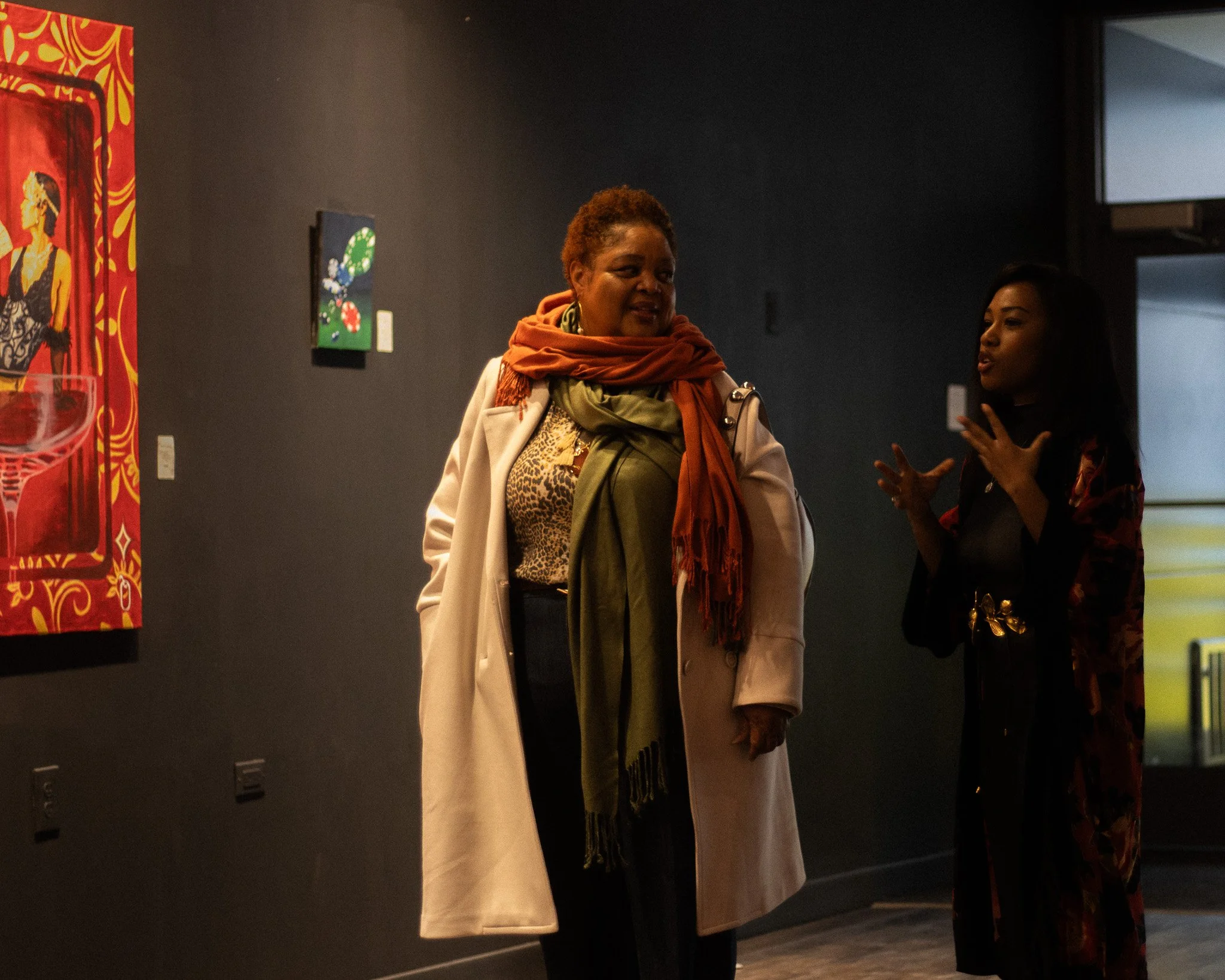
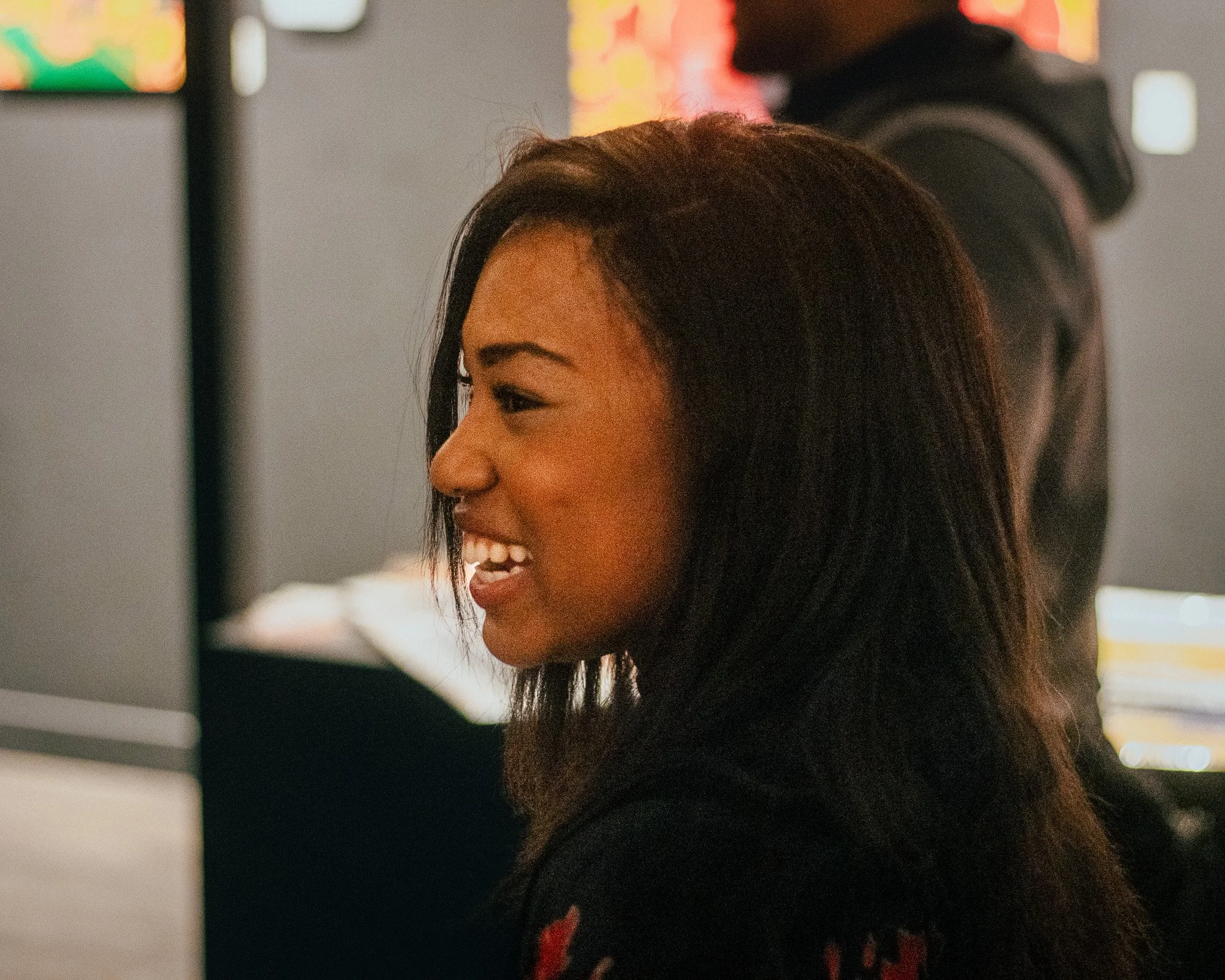
Raven moves through the room, smiling, listening, already absorbing what’s next. She doesn’t linger too long here either, and that feels right.